
In-Network With Most Commercial Insurers










*Please note that at this time, we are not in network with Medicaid/Medi-Cal
A Residential Treatment Program Designed for Teen Boys
Adolescent boys face a distinct set of pressures and vulnerabilities—and the way those pressures manifest clinically is often different from what parents expect. The mental health challenges that bring boys into residential treatment—depression, anxiety, trauma, substance use, behavioral escalation—frequently present as externalized distress: aggression, defiance, risk-taking, emotional shutdown, or substance use that looks like rebellion but is actually an attempt to manage pain the boy doesn’t have words for.
Boys are socialized from a young age to suppress vulnerability. The cultural script that tells boys to “tough it out” or “man up” doesn’t eliminate emotional pain—it drives it underground, where it emerges as anger, impulsivity, withdrawal, or self-medication. By the time a boy reaches the point of needing residential care, he may have spent years hiding his distress behind behaviors that adults interpret as willful defiance rather than the coping mechanism it actually is.
At Muir Wood, we recognize that effective treatment for teen boys requires an environment where it is genuinely safe to be vulnerable. Our gender-separate residential program is structured to give boys the space, the permission, and the clinical support to access emotions they’ve learned to suppress—and to build the self-regulation skills that allow them to respond to distress in healthier ways. Boys live and receive treatment alongside peers who share similar experiences, which reduces performance pressure and allows for the kind of honest engagement that makes treatment work.
Why Gender-Separate Programming Matters for Healing
Gender-separate residential treatment isn’t about reinforcing stereotypes or limiting self-expression. It’s a clinical decision rooted in what we know about how adolescents heal. In a gender-separate environment, teens can focus on their own recovery without the social pressures, performance dynamics, and relational triggers that mixed-gender settings can introduce—particularly during a period when they are already vulnerable.

For adolescent boys specifically, gender-separate programming creates a therapeutic space where boys can engage with emotions they’ve been taught to hide—sadness, fear, shame, loneliness—without the added pressure of performing toughness or emotional invulnerability in front of girls. Peer relationships develop around authenticity rather than posturing, which accelerates therapeutic progress. Boys who have experienced trauma, bullying, or profound shame are more likely to engage openly when the environment is structured to minimize judgment and competition. Therapeutic content can be tailored to the specific clinical presentations common among adolescent boys—including externalized distress, impulsivity, emotional suppression, substance use as self-medication, and identity development.
Inclusive and Affirming Within a Gender-Separate Structure
Our residential campuses are organized as gender-separate based on birth sex. Within that structure, we honor and affirm every teen’s identity. Many of the adolescents in our care identify as LGBTQ+, and our entire clinical and residential team is trained in inclusive, gender-affirming, trauma-informed care. We respect each teen’s pronouns, support their self-exploration, and create an environment where identity development is treated as a healthy and important part of adolescence—not something to manage or correct.

Adolescence is a time of identity formation. At Muir Wood, our goal is for every teen to feel good about who they are and to explore their identity in safe, supportive, and affirming ways. Gender-separate programming provides the structure; affirming care provides the warmth.
When Teen Boys Need Residential Mental Health Care

Signs Your Son May Need a Higher Level of Care
It can be difficult to know when a boy’s behavior has crossed the line from typical adolescent turbulence into something that requires professional intervention. For boys, the signs often look like behavioral problems rather than emotional ones—which means the underlying mental health condition can go unrecognized for months or years.
Patterns that may signal a need for residential care include escalating anger, aggression, or explosive behavior that is out of proportion to the situation; substance use that has moved beyond experimentation into a regular coping pattern; increasing defiance, risk-taking, or reckless behavior—especially when it seems driven rather than merely thoughtless; emotional withdrawal or shutdown—a boy who has become unreachable, uncommunicative, or disconnected from family and friends; declining academic performance, school refusal, or loss of motivation; self-harm or expressions of hopelessness, worthlessness, or suicidal thinking; and legal involvement or behavioral escalation that is creating safety concerns at home or in the community.
When Outpatient Therapy Is No Longer Enough
Many families arrive at Muir Wood after months or years of outpatient therapy, medication adjustments, school interventions, or behavioral consequences that haven’t produced lasting change. That journey isn’t wasted—it’s important context that informs how we approach treatment. But when a boy’s symptoms are intensifying despite active outpatient support, when safety concerns are present, or when daily functioning has declined significantly, residential treatment provides the structured, immersive clinical environment that outpatient settings simply cannot offer.
Residential care is not a last resort. It’s the right level of care when the right level of care is needed. The earlier families reach out, the more effectively we can intervene before crisis patterns become entrenched.
I would love to see people getting help a little earlier. Intervening earlier can prevent a whole lot of unnecessary fallout.
— Dr. Ian Wolds, PsyD, Chief Clinical Officer
Residential Treatment vs. Outpatient, PHP, or Inpatient Care
Understanding where your son falls on the continuum of care can help guide the right decision. Weekly outpatient therapy is appropriate when symptoms are manageable and the teen can apply skills independently between sessions. Partial hospitalization (PHP) provides daytime programming while the teen returns home in the evening. Residential treatment provides 24/7 structured clinical support for teens who need immersive stabilization, close psychiatric monitoring, and daily therapeutic engagement that lower levels of care cannot offer. Inpatient hospitalization is reserved for acute crisis stabilization—active suicidality, psychotic episodes, or severe safety concerns requiring immediate medical intervention—and is typically short-term. For many boys, residential treatment is the critical bridge between crisis and lasting recovery.
Our Evidence-Based Treatment Approach

Individual Therapy and Personalized Treatment Plans
No two boys arrive at Muir Wood with the same story. Treatment begins with a comprehensive, multidisciplinary assessment that evaluates each teen’s mental health, trauma history, substance use patterns, family dynamics, social functioning, behavioral patterns, identity development, and academic needs. From this assessment, our clinical team builds a treatment plan that is specific, purposeful, and responsive to the full picture of who this young person is and what he needs.
Our goal is always to understand the full picture—not just the symptoms, but the story behind them. That’s how we ensure treatment is truly personalized and effective for each teen we serve.
— Dr. Ian Wolds, PsyD, Chief Clinical Officer
Individual therapy provides one-on-one sessions with a primary therapist who also conducts family therapy—so the clinical picture stays unified. For boys, individual therapy often begins with building trust and creating safety before moving into deeper processing of trauma, identity, relationship patterns, and the emotional pain driving symptoms. Treatment plans evolve as boys progress; our team reassesses regularly and adjusts as needed.
Group Therapy and Peer Support
Therapist-led group sessions are a core component of treatment. For many boys, group therapy is where the most powerful work happens—because it’s where they discover they’re not alone. Hearing another boy articulate the fear, anger, or confusion they’ve been carrying but couldn’t name can be a turning point. Groups build trust, practice communication, develop conflict resolution skills, and create the kind of genuine peer connection that many boys in crisis have been missing. The gender-separate environment makes this possible by removing the performance pressure that often prevents boys from being honest in mixed-gender settings.
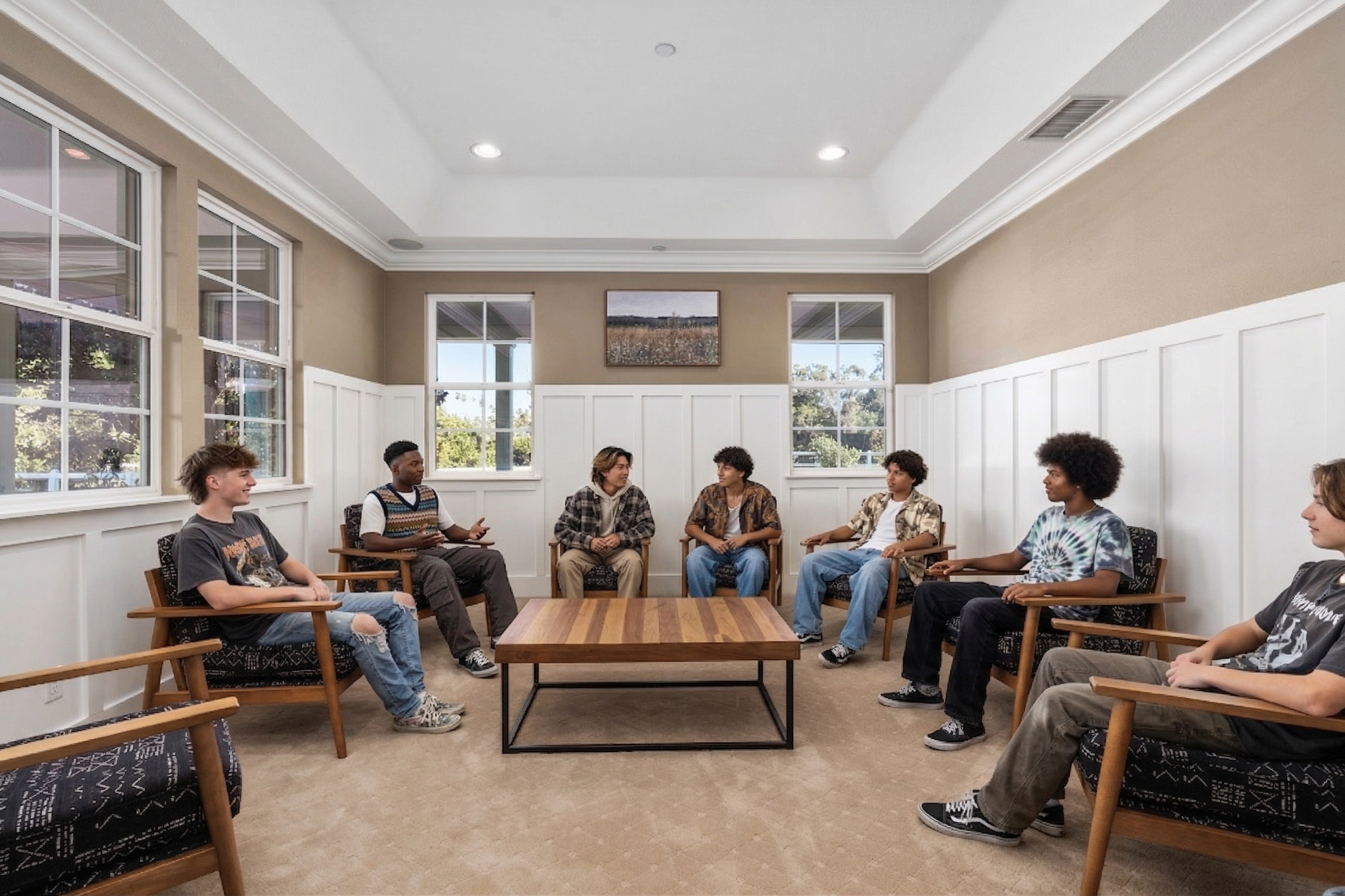
When boys feel safe and understood, they begin to show up differently in therapy. They start sharing more openly, building trust, and doing the deep work that leads to real change.
— Dr. Ian Wolds, PsyD, Chief Clinical Officer
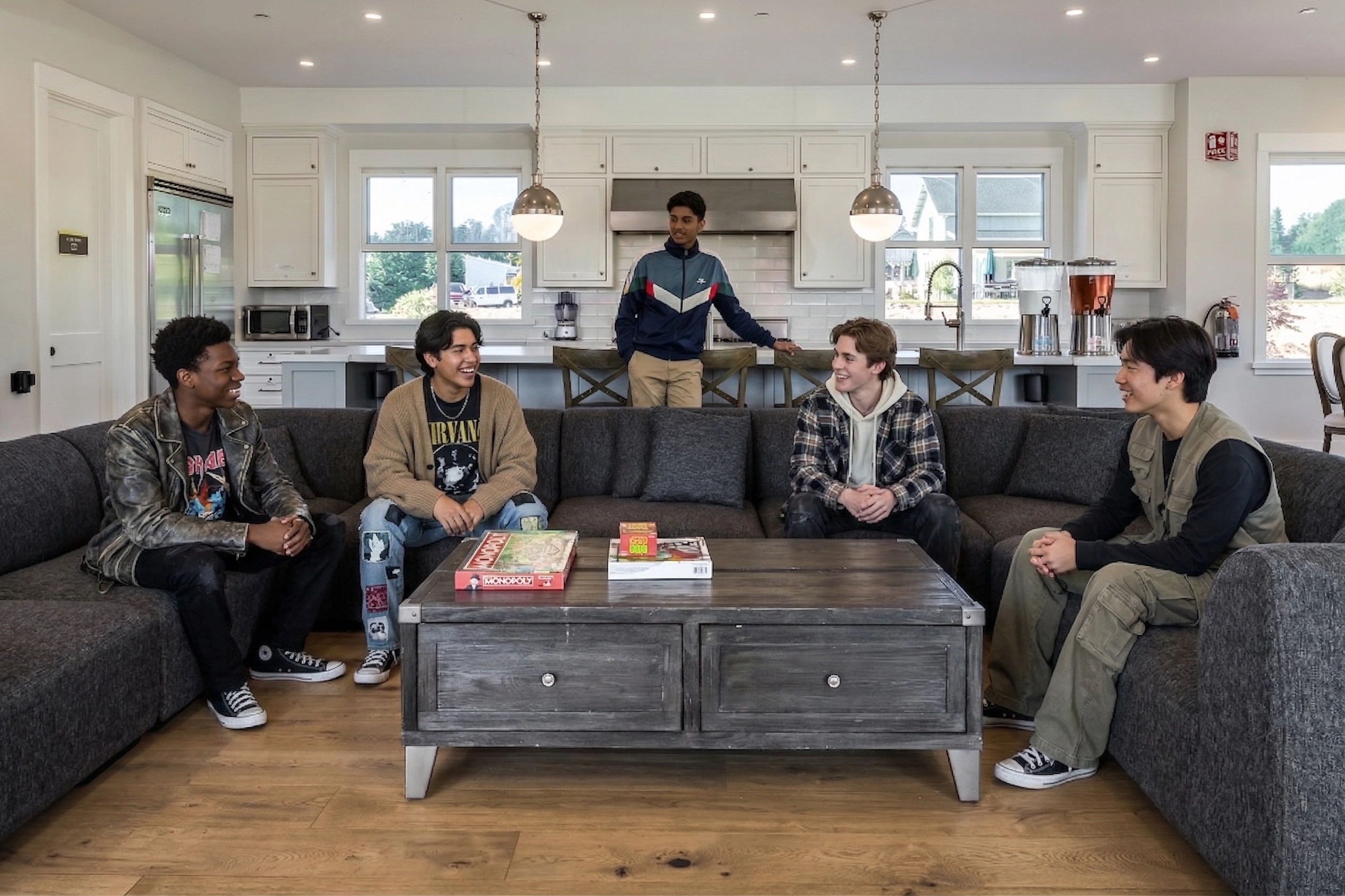
Dialectical Behavior Therapy (DBT) and Skill Building
DBT skills—distress tolerance, emotional regulation, interpersonal effectiveness, and mindfulness—are central to our program. For boys who have relied on anger, avoidance, or substances to manage distress, DBT provides concrete, practical alternatives. These skills give boys a way to handle intense emotions without escalating, shutting down, or self-medicating—and the residential setting provides daily opportunities to practice them in real-world contexts.
Experiential and Recreational Therapies
Many boys process emotions more effectively through action than through conversation alone. Art, music, yoga, mindfulness, outdoor activities, and physical challenges provide alternative pathways for self-expression and emotional processing. Experiential modalities help boys access feelings they may not yet have words for, practice teamwork and trust, and build a sense of accomplishment and competence that strengthens self-esteem. For boys who have historically resisted traditional talk therapy, experiential approaches often provide the breakthrough that makes deeper therapeutic work possible.

Addressing Co-Occurring Mental Health and Substance Use
Many teen boys who come to Muir Wood are managing mental health conditions alongside substance use—alcohol, marijuana, vaping, prescription misuse, or other substances used as attempts to cope with emotional pain. Substance use in adolescent boys is rarely about getting high. It is almost always about self-medication: managing anxiety, numbing depression, escaping trauma, or dampening the emotional intensity the boy doesn’t know how to handle.
We treat substance use and mental health conditions simultaneously through an integrated model, because for adolescents, these challenges are almost always connected. Our approach addresses the underlying distress that drives substance use while building the self-regulation skills and healthier coping strategies that make lasting recovery possible.
Our boys’ residential program treats the full range of adolescent mental health conditions, including depression and mood disorders, anxiety disorders, trauma and PTSD (including complex trauma), ADHD, bipolar disorder, suicidal ideation and self-harm, OCD and related conditions, emotional dysregulation, and behavioral escalation driven by underlying mental health conditions. Every condition is assessed and treated within the context of the whole teen—not as an isolated diagnosis.
Building Emotional Regulation, Behavioral Health, and Life Skills
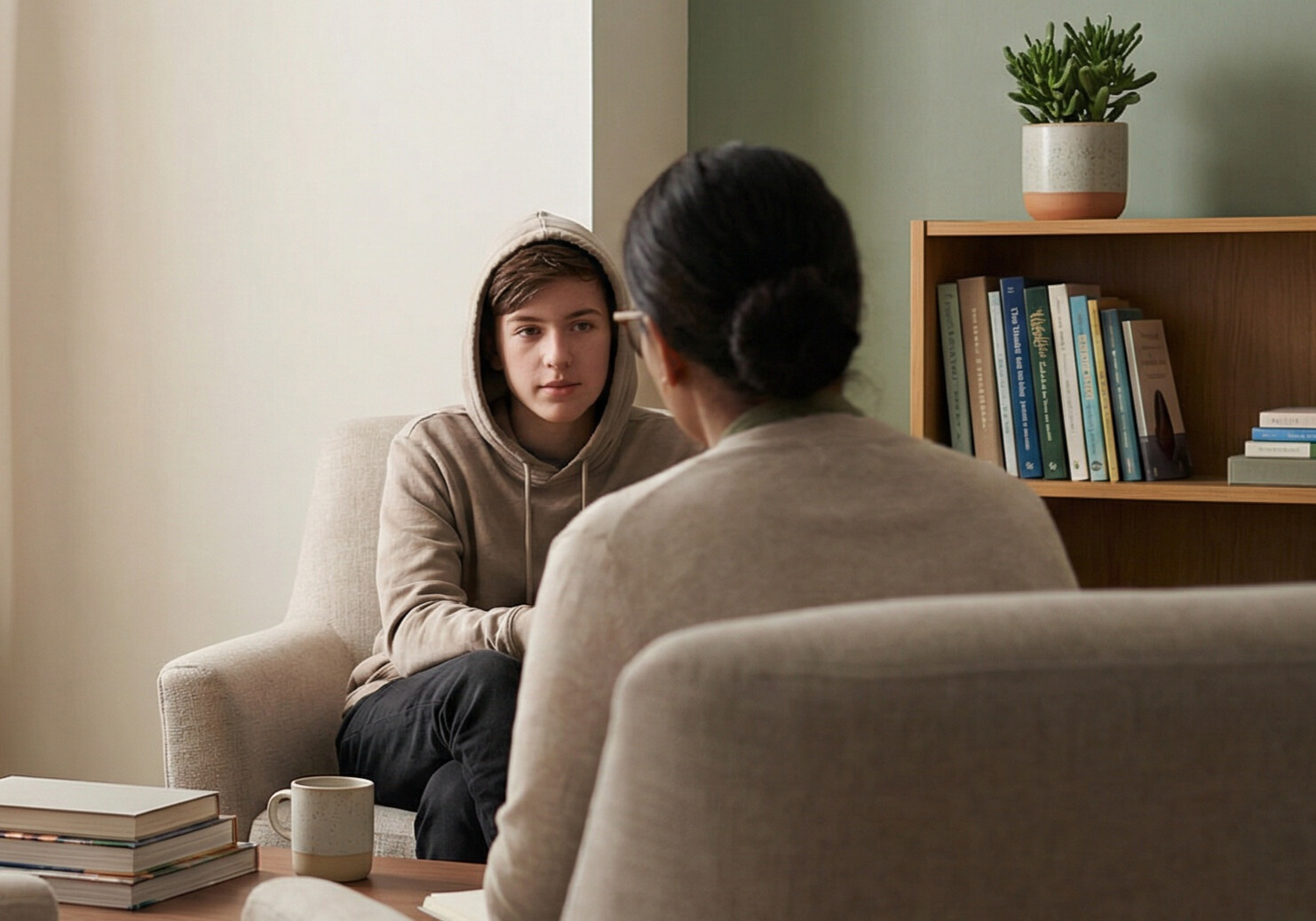
Emotional Awareness and Regulation
Many boys arrive at Muir Wood with a narrow emotional vocabulary: angry, fine, or nothing. Treatment expands that vocabulary—helping boys recognize the sadness underneath the anger, the fear underneath the defiance, the loneliness underneath the withdrawal. This isn’t about making boys “more emotional.” It’s about giving them access to the full range of human experience so they can respond to what they’re actually feeling, rather than reacting to a compressed version of it.
Self-regulation skills drawn from DBT, CBT, and ACT give boys concrete tools for managing intense emotions without escalating, shutting down, or self-medicating. In a residential setting, these skills are practiced in real time—during peer conflicts, academic frustrations, family calls, and the everyday activations that mirror life outside treatment. Progress is measured not by whether a boy understands a concept, but by his ability to use new skills in moments of activation.
Life Skills and Responsibility
Beyond clinical therapy, treatment helps boys develop the practical skills they need for life after residential care.
Accountability: learning to own decisions and their outcomes rather than externalizing blame.
Healthy communication: building the life skills to express needs, resolve conflicts, and maintain relationships without aggression or avoidance.
Distress tolerance: sitting with uncomfortable emotions without needing to act on them immediately.
Executive functioning: planning, organization, time management, and follow-through that support success in school and daily life.
Identity development: exploring who they are beyond the behaviors that brought them to treatment, and building a sense of self-worth that doesn’t depend on performance, status, or substances.

The Muir Wood Teen Difference
Our team partners closely with parents and caregivers from day one—providing clear communication, a personalized plan, and practical tools for life after treatment. While teens receive structured, therapeutic support in a peer environment, families are equipped alongside them to support continued progress and lasting change.
Some of our key differentiators include:
Specialists in Adolescent Care
Everything we do is built for teens ages 12–17, not adapted from adult models. Our team includes board-certified psychiatrists, highly trained therapists, nurses, educators, and recovery counselors who specialize exclusively in adolescent mental health and substance use treatment. Working as an integrated team, they deliver evidence-based, developmentally appropriate care tailored to each teen’s unique needs.
Environments That Foster Connection and Growth
In serene, nature-rich settings, our campuses are designed specifically for adolescent healing. With 24/7 care, boys spend their days as part of a broader community—engaging in therapy, academics, and outdoor activities that strengthen resilience and self-awareness. In the evening, they return to home-like residences to process, decompress, and connect with caring adults. This balance of community and intimacy creates a healing environment where every moment becomes part of the recovery process.
Expertise in Primary Mental Health + Substance Use
With expertise in treating both primary mental health and co-occurring substance use challenges, our trauma-informed approach helps teens heal deeply and build lasting change. We focus on the whole person—addressing both emotional wellbeing and underlying behavioral patterns—to support lifelong healing.
Support for the Whole Family
Healing doesn’t happen in isolation—it happens together. At Muir Wood, families stay actively involved through therapy, education, and a 16-week aftercare coaching program that builds trust, communication, and stability long after treatment ends.
Accessible, High-Quality Care Covered by Insurance
Muir Wood is committed to removing financial barriers to care by partnering with most major insurance providers, ensuring families can access high-quality, evidence-based treatment when it matters most.
Educational Support That Restores Confidence
Through our WASC-accredited academic program, students continue their education with personalized support. We help boys organize assignments, manage stress, and develop executive functioning skills. Success in the classroom becomes a vital step in restoring confidence, structure, and a sense of possibility. When helpful, we coordinate directly with home schools so that treatment gains translate into the classroom.
Continuum of Care
We believe strong outcomes depend on continuity and collaboration. From admission through discharge, we coordinate closely with your teen’s existing providers and aftercare programs—whether that’s Muir Wood residential, our IOP, or another trusted outpatient partner. Shared clinical leadership and consistent therapeutic philosophy ensure each teen’s progress continues without interruption.
Speak With a Teen Treatment Specialist
Connect with our admissions team today to learn how Muir Wood can support your family.
A Multidisciplinary Treatment Team
Licensed Clinicians and Mental Health Professionals
Every boy at Muir Wood is supported by a multidisciplinary team that works together daily. Board-certified adolescent psychiatrists oversee evaluation, stabilization, and medication management. Licensed therapists provide individual, group, and family therapy using evidence-based approaches. Recovery counselors serve as daily mentors, offering real-time coaching and support—not as monitors, but as caring adults who model the kind of emotional regulation and problem-solving they’re teaching. Nurses ensure safety and provide integrated support for both emotional and physical wellbeing.


On-Site Psychiatric and Nursing Support
Our board-certified adolescent psychiatrists are integrated into the treatment team—not consultants who visit once a week. This allows for close monitoring of medication response, rapid adjustment when needed, and the kind of real-time clinical decision-making that outpatient psychiatry cannot provide. When medication is clinically appropriate, we use the least amount necessary to support stability and functioning, always in combination with therapy. Residential treatment is uniquely positioned to safely initiate or adjust medications and observe response around the clock.
Family Therapy and Parent Involvement
Family involvement is a core component of treatment at Muir Wood—not an optional add-on. From the first week, families have access to weekly family therapy conducted by their son’s primary therapist, twice-weekly family classes led by our Director of Family Services, a weekly parent support group, and regular huddle calls with the treatment team for progress updates and aftercare planning. Our 16-week aftercare coaching program continues supporting families through the critical transition home.
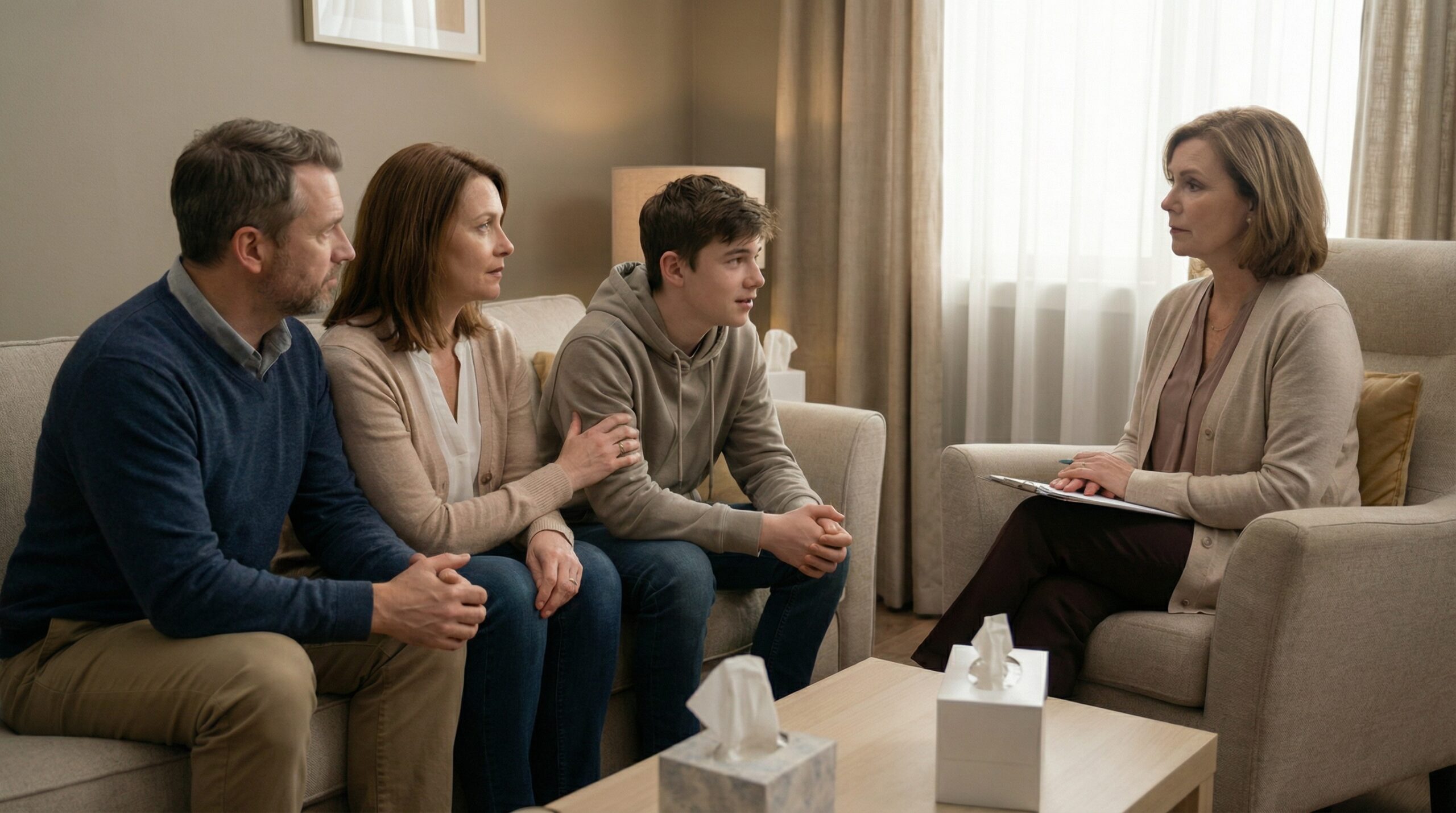
The greatest impact we can have on a teen’s long-term recovery isn’t just what happens in individual therapy—it’s what happens in the family. When parents do their own healing work, they change the emotional environment the teen returns to. That’s where real, sustainable recovery happens.
— Dr. David E. Smith, Chair, Addiction Medicine & MQAC, Muir Wood
Daily Life in Residential Care
Therapeutic Structure Each Day
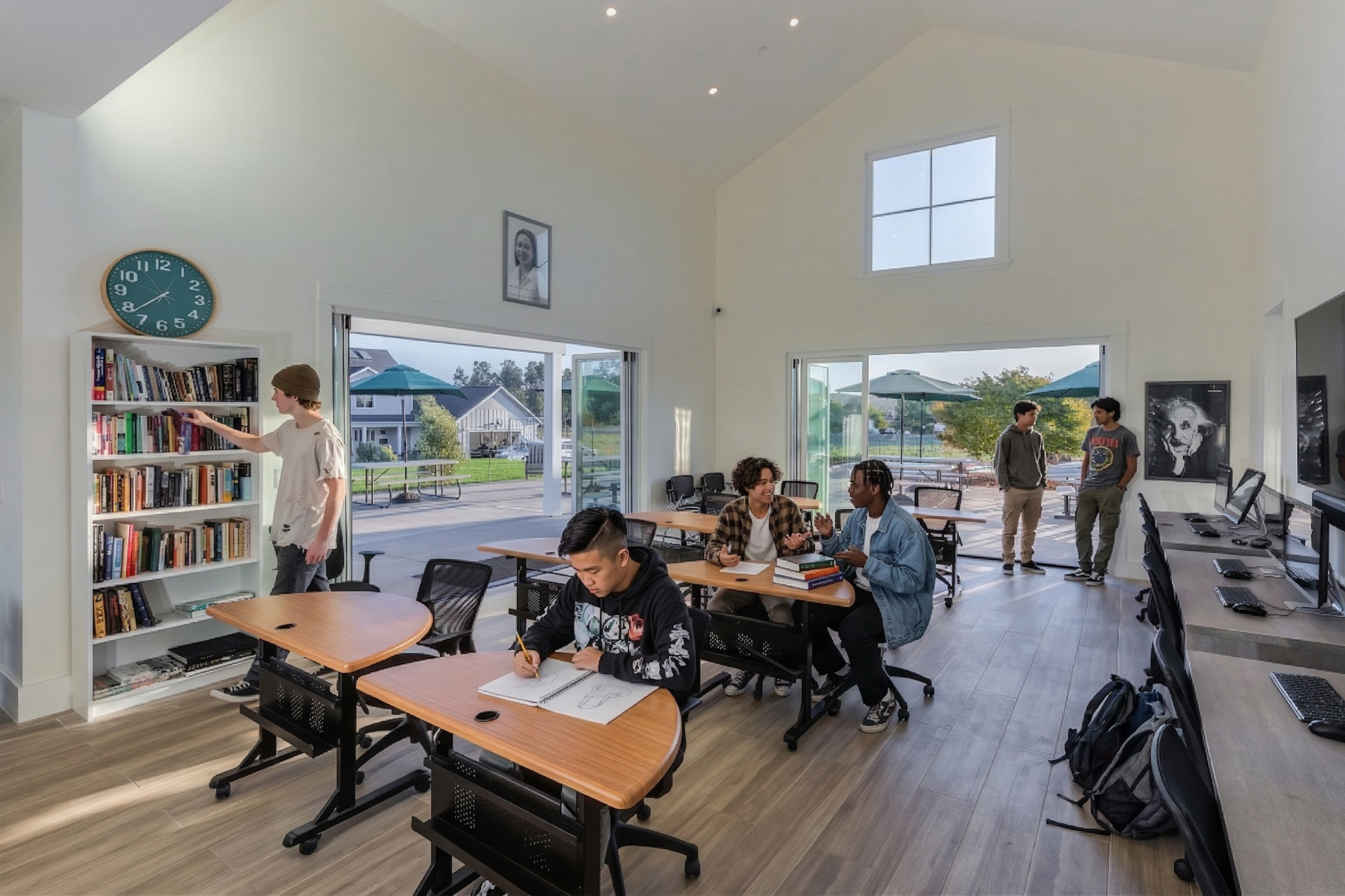
A structured daily routine provides the predictability and accountability that many boys in treatment need. Mornings begin with wellness check-ins and breakfast, followed by our academic program. Afternoons include individual and group therapy, experiential activities, and skill-building sessions. Evenings provide time for family phone calls, peer connection, journaling or reflection, and healthy sleep routines. The consistency of the daily schedule helps boys feel grounded while the variety of therapeutic modalities keeps engagement high.
The spaces between structured activities are just as important. Moments like waking up, managing frustration, navigating a peer disagreement, or settling down at night become opportunities for real-time coaching and skill practice—with recovery counselors present to offer support exactly when it’s needed.
Supporting Educational Needs
Treatment doesn’t mean falling behind in school. Our WASC-accredited academic program provides personalized educational support so boys can stay current with their schoolwork during mental health treatment. We coordinate with home schools, help with assignment management, and focus on building the executive functioning skills—planning, time management, organization, and self-advocacy—that support academic success both during and after treatment. For many boys, rebuilding academic confidence becomes one of the first visible signs of progress.

Trauma-Informed Care for Teen Boys
Most boys who come to Muir Wood have experienced some form of adversity that shapes how they see themselves, relate to others, and respond to stress. What gets labeled as “defiance” or “aggression” is often a protective response rooted in past pain. A boy who lashes out may be reacting to a perceived threat. A boy who shuts down may be protecting himself from vulnerability he’s learned is unsafe. Our team is trained to recognize these patterns and respond in ways that support healing—creating emotional safety through predictable routines, clear expectations, and consistent relationships.
Trauma-informed care at Muir Wood means we always ask “what happened to you?” before “what’s wrong with you?” It means recognizing that resistance is often a form of self-protection. It means every member of our team—not just therapists—understands how trauma shows up in daily interactions and responds in ways that de-escalate rather than escalate distress. And it means that every teen, regardless of gender identity, sexual orientation, or stage of self-discovery, receives care that affirms who they are.
Treatment Options and Continuum of Care
Step-Down Treatment Options
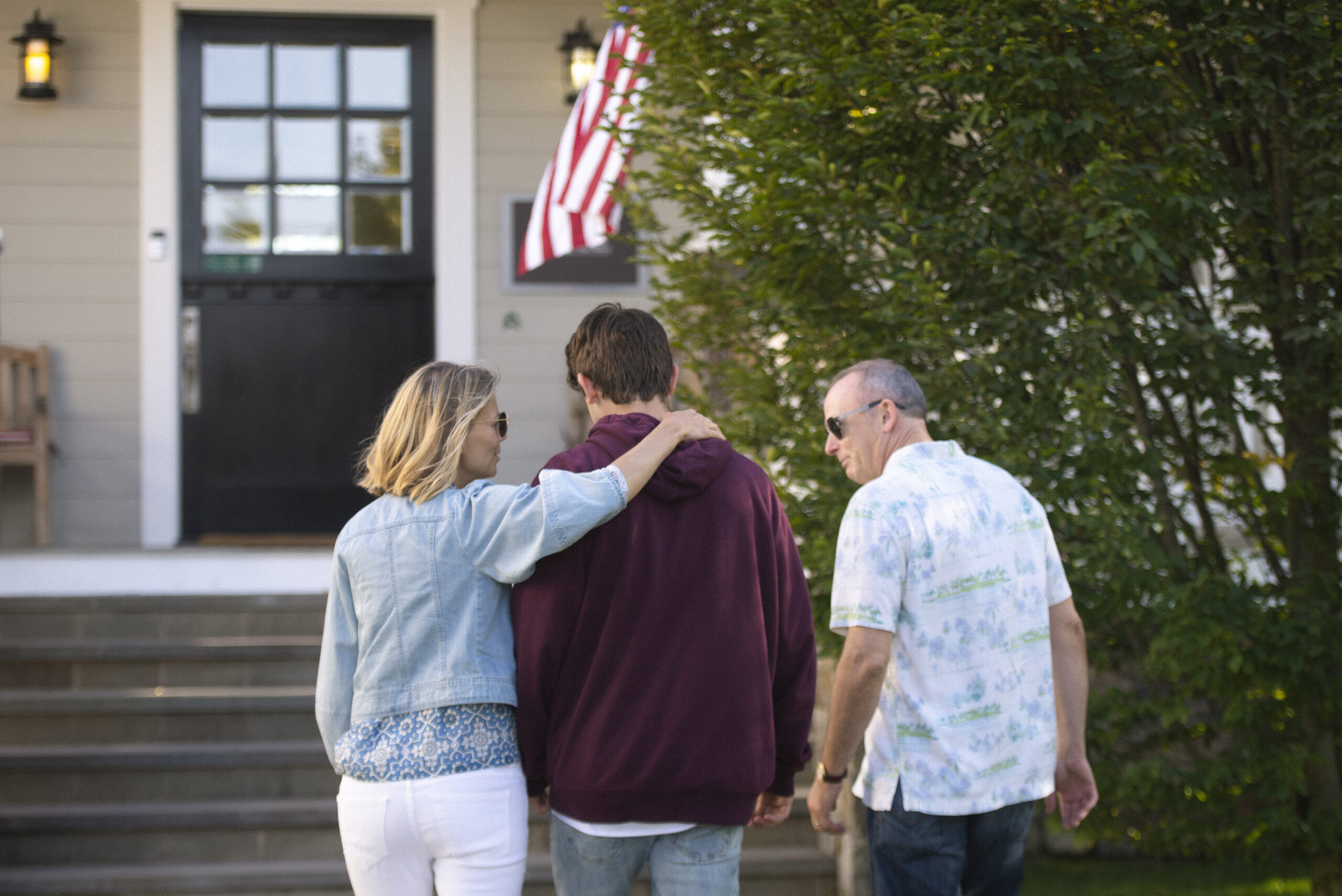
Discharge planning begins at admission, not in the final days of treatment. Our clinical team works with each family and their existing providers to build a transition plan that is specific, realistic, and designed to sustain the progress made during residential care. Many families step down to Muir Wood’s intensive outpatient program. Others return to an outpatient therapist in the home community. In both cases, we coordinate closely with aftercare providers to ensure continuity—because the transition home is one of the most vulnerable windows in recovery.
Long-Term Recovery and Wellness
Our 16-week aftercare coaching program provides structured weekly sessions that help families navigate the real-world challenges of reintegration—including how to respond when old patterns resurface, how to maintain the skills and communication strategies built during treatment, and how to rebuild when setbacks occur. Parents can continue attending family classes for up to a year after discharge. The skills boys learn during treatment—emotional regulation, distress tolerance, healthy communication, accountability—are tools they carry with them for life.

FAQs About Residential Treatment for Teen Boys
Residential treatment at Muir Wood typically ranges from 45 to 90 days, depending on the severity, complexity, and trajectory of each teen’s needs. Some boys benefit from a longer stay. Treatment length is determined collaboratively by the clinical team, the family, and the teen’s response to care.
Inpatient hospitalization is designed for acute crisis stabilization—active suicidality, psychotic episodes, or severe safety concerns requiring immediate medical intervention. It is typically short-term. Partial hospitalization (PHP) provides daytime programming while the teen returns home each evening. Residential treatment provides 24/7 structured clinical support in a home-like setting, with daily therapy, academic programming, and family involvement—a level of immersive care designed for teens who need sustained stabilization and skill-building that lower levels of care cannot provide.
Our boys’ residential program treats depression, anxiety disorders, trauma and PTSD, ADHD, bipolar disorder, suicidal ideation, self-harm, OCD, emotional dysregulation, behavioral escalation, and co-occurring substance use disorders. Every condition is assessed and treated within the context of the whole teen—not as an isolated diagnosis. Our integrated model addresses mental health and substance use simultaneously.
Muir Wood is in-network with most major commercial insurance plans. We do not currently accept Medicaid or Medi-Cal. Our admissions team works directly with families to verify coverage, explain benefits, and navigate the authorization process. Verify your insurance online or call for a confidential benefits check.
Self-harm in adolescent boys is more common than many parents realize and often goes unrecognized because boys may hide it or because the behavior is misinterpreted as risk-taking. Our clinical team assesses the function of the behavior, addresses the underlying emotional pain, and helps boys develop safer coping strategies through DBT skills, individual therapy, and the structured safety of the residential environment. Self-harm does not disqualify a teen from treatment; it is exactly what treatment is designed to address.
Yes. Our WASC-accredited academic program provides personalized educational support so boys can stay current with their schoolwork during treatment. We coordinate with home schools, help with assignment management, and focus on building executive functioning skills that support academic success both during and after treatment.
Family involvement is a required component of treatment. Families have access to weekly family therapy, twice-weekly family classes, a weekly parent support group, and regular progress updates from the treatment team. All family programming is available via Zoom for families who cannot attend in person. Our 16-week aftercare coaching program extends support well beyond discharge. We believe the most effective treatment happens when the whole family is engaged.
Muir Wood treats mild-to-moderate disordered eating patterns that co-occur with other mental health conditions, including muscle dysmorphia and body image concerns that are increasingly common in adolescent boys. We do not provide primary eating disorder treatment requiring medical stabilization. If a boy’s eating concerns require specialized medical intervention, we can help families identify appropriate resources and coordinate care.
Residential treatment is typically appropriate when outpatient care has not been sufficient—when symptoms are worsening, daily functioning has declined significantly, safety concerns are present, or substance use has become a primary coping strategy. If your son’s behaviors are escalating despite active treatment, or if the home environment can no longer safely support his needs, residential care provides the structure and clinical intensity needed for meaningful change. Our admissions team can help you assess whether Muir Wood is the right fit.
Absolutely. Our programs are gender-separate to create clarity, comfort, and safety in the healing environment. Within that structure, every teen—including those who are transgender, nonbinary, or questioning—receives individualized, affirming care from a team trained in inclusive, trauma-informed practice. We respect each teen’s pronouns, support their identity exploration, and ensure they feel seen and valued for who they are.
Your Teen Deserves a Path Forward
If your son is struggling with mental health challenges, substance use, behavioral escalation, or a combination of issues that outpatient care hasn’t been able to address—compassionate, specialized help is available. Our admissions team can listen to what your family is going through, help you understand your options, and guide you toward the right level of care. There’s no pressure and no obligation—just an honest conversation about what your son needs right now.