
In-Network With Most Commercial Insurers











*Please note that at this time, we are not in network with Medicaid/Medi-Cal
Help for Teens Living With Bipolar Disorder

Few diagnoses carry as much weight for a parent as bipolar disorder. The word itself can feel frightening—loaded with uncertainty about what it means for your teen’s future, their relationships, their ability to go to school, hold friendships, and simply feel like themselves. If your teen has recently been diagnosed, or if you suspect bipolar disorder may be part of what’s happening, it’s understandable to feel a mix of fear, confusion, and urgency to do something—anything—to help.
Here’s what we want you to know first: bipolar disorder is treatable. It is one of the most well-studied mood disorders in psychiatry, and with the right combination of clinical support, medication management, psychotherapy, and family involvement, many teens achieve meaningful mood stabilization. The path forward may not be simple, but it is real—and you are not navigating it alone.


At Muir Wood, our residential and intensive outpatient programs are designed specifically for adolescents ages 12–17, including those living with bipolar disorder and co-occurring mental health conditions. Our multidisciplinary clinical team—including board-certified adolescent psychiatrists, licensed therapists, nurses, and educators—works together to provide the structured, developmentally appropriate care that bipolar disorder in teens requires. From comprehensive psychiatric evaluation through discharge planning and aftercare, every treatment plan is coordinated around your teen’s full clinical picture—not just a diagnosis.
Why Bipolar Disorder Requires Specialized Teen Treatment
Bipolar disorder doesn’t present the same way in adolescents as it does in adults—and treating it effectively requires clinicians who understand those differences.
The adolescent brain is still developing, particularly the prefrontal cortex, which governs impulse control, emotional regulation, and decision-making. This ongoing development means that mood episodes in teens can be more volatile, less predictable, and harder to distinguish from other conditions.
Adolescent mania, for example, is more likely to present as intense irritability and explosive anger than as the euphoric, grandiose mood more commonly seen in adults. Depressive episodes may look like social withdrawal, physical complaints (headaches, fatigue), or extreme sensitivity to rejection—symptoms that overlap with typical adolescent challenges and other mood disorders.
This overlap is one reason bipolar disorder is so frequently misdiagnosed in adolescents. Research consistently shows that bipolar disorder is underdiagnosed in young people, often mistaken for ADHD, unipolar depression, or anxiety disorders. The most common initial misdiagnosis is unipolar depression, which carries particular risk: treatment with antidepressants alone, without a mood stabilizer, can trigger manic episodes or accelerate mood cycling. The consequences of misdiagnosis aren’t just frustrating—they can be clinically harmful.
Safety is another reason specialized treatment matters. Bipolar disorder is associated with elevated risk of self-harm and suicidal behavior in adolescents, particularly during depressive episodes or mixed episodes. When teens are also navigating the social, academic, and identity-related pressures of adolescence, the need for close clinical monitoring becomes critical.
With the right structure, observation, and care—provided by clinicians who specialize in how bipolar disorder manifests during this developmental stage—many teens achieve meaningful stability and go on to lead full, engaged lives.
The Muir Wood Teen Difference
Our team partners closely with parents and caregivers from day one—providing clear communication, a personalized plan, and practical tools for life after treatment. While teens receive structured, therapeutic support in a peer environment, families are equipped alongside them to support continued progress and lasting change.
Some of our key differentiators include:
Specialists in Adolescent Care
Everything we do is built for teens ages 12–17, not adapted from adult models. Our team includes board-certified psychiatrists, highly trained therapists, nurses, educators, and recovery counselors who specialize exclusively in adolescent mental health and substance use treatment. Working as an integrated team, they deliver evidence-based, developmentally appropriate care tailored to each teen’s unique needs.
Community and Connection
Our program supports coordinated, therapist-led group therapy alongside meaningful peer interaction. Teens build trust, communication, and coping skills through shared therapeutic experiences and real-time practice. Individual therapy provides personalized support to deepen insight and help teens apply these skills beyond treatment.
Expertise in Primary Mental Health + Substance Use
With expertise in treating both primary mental health and co-occurring substance use challenges, our trauma-informed approach helps teens heal deeply and build lasting change. We focus on the whole person—addressing both emotional wellbeing and underlying behavioral patterns—to support lifelong healing.
Support for the Whole Family
Healing doesn’t happen in isolation—it happens together. At Muir Wood, families stay actively involved through therapy, education, and a 16-week aftercare coaching program that builds trust, communication, and stability long after treatment ends.
Accessible, High-Quality Care Covered by Insurance
Muir Wood is committed to removing financial barriers to care by partnering with most major insurance providers, ensuring families can access high-quality, evidence-based treatment when it matters most.
Maintain Academics While Getting Support
School stays the priority. Whether in residential treatment or IOP, teens can keep up to date with education. We help them map assignments, manage stress, and practice executive functioning skills such as planning, time management, and communication. When helpful, we coordinate with families and schools so gains in treatment carry into the classroom and daily routines.
Continuum of Care
We believe strong outcomes depend on continuity and collaboration. From admission through discharge, we coordinate closely with your teen’s existing providers and aftercare programs—whether that’s Muir Wood residential, our IOP, or another trusted outpatient partner. Shared clinical leadership and consistent therapeutic philosophy ensure each teen’s progress continues without interruption.
Speak With a Teen Treatment Specialist
Connect with our admissions team today to learn how Muir Wood can support your family.
Signs of Bipolar Disorder in Teens
Bipolar disorder is characterized by recurring mood episodes—periods of mania or hypomania alternating with depressive episodes—that represent a clear departure from a teen’s typical mood, energy, and behavior. These episodes are not the same as ordinary adolescent moodiness. They are more intense, last longer, and significantly affect a teen’s ability to function. Healthcare providers may diagnose Bipolar I disorder, Bipolar II disorder, or cyclothymic disorder depending on the pattern and severity of mood episodes.
Emotional Signs
Extreme mood swings that go beyond typical teen moodiness—intense highs followed by deep lows, or alternating between the two in a compressed timeframe. Persistent irritability or explosive anger that seems disproportionate to the situation, particularly during manic or mixed episodes. Inflated self-esteem or grandiosity during manic episodes—a teen may express unrealistic beliefs about their abilities, importance, or invulnerability. Persistent sadness, hopelessness, or emotional flatness during depressive episodes that doesn’t respond to encouragement or positive events.


Behavioral Signs
Increased risk-taking during manic or hypomanic episodes—reckless driving, substance use, sexual behavior, or spending that is out of character. Impulsivity that goes beyond typical adolescent impulsiveness—acting without consideration of consequences in ways that feel driven, not merely thoughtless. Rapid or pressured speech, racing thoughts, and difficulty staying on topic during manic periods. Markedly decreased need for sleep during mania—a teen may sleep only a few hours and show no signs of fatigue—or excessive sleep during depressive phases.
Functional Impact
Academic decline that seems sudden or cyclical rather than gradual—a teen may perform well during stable periods and sharply decline during episodes. Relationship volatility, including intense conflicts, social withdrawal during depression, or grandiose and intrusive behavior during mania. Poor judgment during mood episodes that the teen may recognize as uncharacteristic once the episode resolves. Difficulty maintaining daily routines—hygiene, sleep schedules, commitments, and responsibilities may all deteriorate during active episodes.

Bipolar disorder cannot be diagnosed from symptoms alone. A comprehensive psychiatric evaluation—including detailed history, collateral information from parents and school, and careful differentiation from other conditions—is essential for an accurate diagnosis. This is exactly the kind of thorough, multidisciplinary assessment that residential treatment is uniquely positioned to provide.
When to Seek Treatment for Teen Bipolar Disorder
If your teen has been diagnosed with bipolar disorder—or if you’re seeing a pattern of mood episodes that weekly therapy hasn’t been able to stabilize—it may be time to consider a higher level of care.

Residential treatment or IOP becomes especially important when mood episodes are intensifying in frequency, duration, or severity; when there are safety concerns, including self-harm, suicidal thoughts, or reckless behavior during manic episodes; when outpatient therapy and medication management alone haven’t produced lasting stabilization; when mood episodes are significantly disrupting school, family relationships, or your teen’s ability to function in daily life; or when a previous hospitalization has stabilized the immediate crisis, but your teen needs more support than outpatient care can provide to sustain that stability.
Many families arrive at our door after a cycle that looks familiar: a crisis, a hospitalization, a discharge back to outpatient care, and then another crisis. This pattern isn’t a failure—it’s a signal that the current level of support isn’t matching your teen’s clinical needs. Residential treatment breaks that cycle by providing the sustained structure, psychiatric oversight, and therapeutic intensity needed for real stabilization.

Effective treatment for teen bipolar disorder focuses first on stabilization—helping the teen reach a more regulated baseline—and then on skill-building for long-term mood management. Both steps require time, clinical expertise, and a structured environment that outpatient settings may not be able to provide.
Understanding Levels of Care for Bipolar Disorder
Bipolar disorder often requires different levels of support at different points. Understanding where your teen falls on this continuum can help guide the right decision.
Weekly outpatient therapy is appropriate for teens with mild symptoms, a stable medication regimen, and strong support systems at home and school. It provides regular check-ins and skill-building but relies on the teen’s ability to apply those skills independently between sessions.
Inpatient hospitalization is reserved for acute crisis stabilization—active suicidality, psychotic episodes, or severe mania requiring immediate medical intervention. Hospitalization stabilizes the immediate danger but is typically short-term; residential treatment provides the sustained clinical work that follows.
Residential treatment provides 24/7 structured clinical support in a therapeutic environment. It is designed for teens who need immersive stabilization, close psychiatric monitoring, and the kind of daily therapeutic engagement that lower levels of care cannot offer.
Intensive outpatient programs (IOP) offer more frequent therapeutic contact—typically several sessions per week—while allowing the teen to continue living at home. IOP may be appropriate as a step-up from weekly therapy or a step-down from residential care.
When Residential Care May Be Recommended

Residential treatment is often the right fit for teens experiencing active mania or hypomania that is causing safety concerns or significant functional impairment; severe depressive episodes with suicidal ideation, self-harm, or inability to participate in daily life; rapid cycling between mood states that outpatient providers have been unable to stabilize; the need for close medication monitoring—including medication initiation, adjustment, or the observation period needed to assess whether a new regimen is working; or co-occurring conditions (substance use, anxiety, trauma) that complicate stabilization and require integrated, multidisciplinary care.
When IOP May Be Appropriate
IOP may be appropriate for teens who are stable enough to live safely at home but need more support than weekly therapy provides; teens stepping down from residential treatment who need continued structure as they transition back to daily life; or teens whose symptoms are present and impairing but do not require 24/7 clinical monitoring.
Our Clinical Approach to Treating Teen Bipolar Disorder
Comprehensive Psychiatric Evaluation
Our goal is always to understand the full picture—not just the symptoms, but the story behind them.
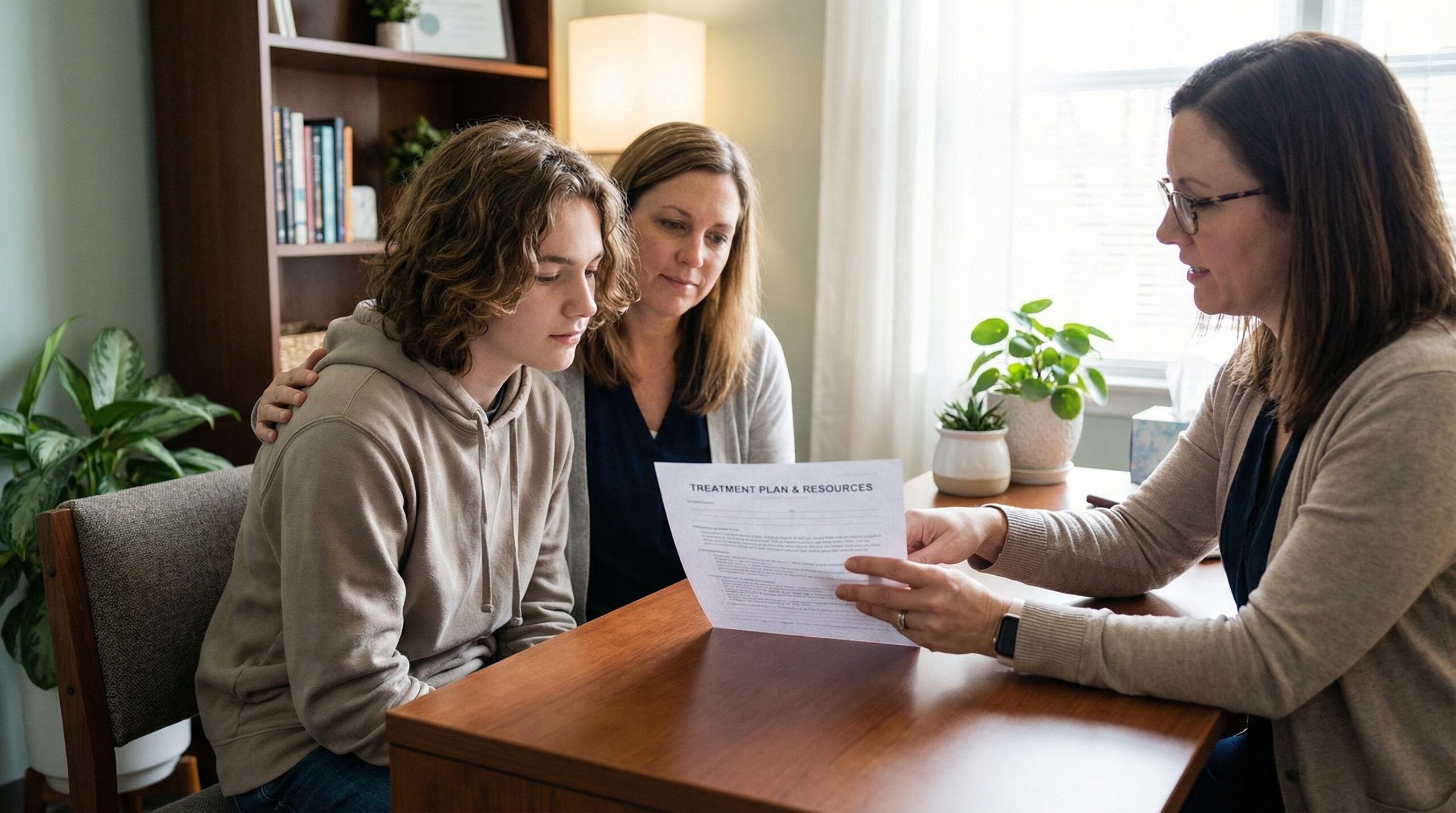
Treatment begins with a thorough, multidisciplinary assessment. Our team evaluates not just the presenting symptoms but the full clinical picture—developmental history, family dynamics, prior diagnoses and treatment responses, trauma history, substance use, academic functioning, and social-emotional development. For a condition as complex and commonly misdiagnosed as bipolar disorder, this depth of evaluation is essential.
Diagnoses are reviewed throughout treatment and revised as indicated by our clinical observations. In a residential setting, the clinical team has the advantage of observing a teen across multiple contexts—therapy, peer interaction, academic work, daily routines, sleep patterns—over an extended period. This kind of sustained observation is often what finally clarifies whether a teen’s symptoms reflect bipolar disorder, another mood condition, or a more complex picture that requires integrated treatment.

Mood Stabilization
For many teens with bipolar disorder, the first clinical priority is stabilization—reducing the intensity and frequency of mood episodes so that the teen can engage meaningfully in therapy and daily life. Stabilization doesn’t mean eliminating all mood variability; it means bringing mood episodes to a manageable level where the teen can begin to build the skills and awareness needed for longer-term regulation.
In a residential setting, stabilization is supported by the structure of the environment itself. Consistent daily routines, predictable expectations, regular meals and sleep schedules, and the absence of many external stressors that can trigger episodes all contribute to creating a foundation for psychiatric and therapeutic work.
Evidence-Based Therapies
Cognitive Behavioral Therapy (CBT) addresses how thoughts, feelings, and behaviors interact. For teens with bipolar disorder, CBT helps identify the cognitive patterns associated with mood episodes—such as grandiose thinking during mania or catastrophic thinking during depression—and builds practical skills for interrupting those patterns.


Dialectical Behavior Therapy (DBT) skills are particularly valuable for bipolar disorder. DBT builds capacity in emotional regulation, distress tolerance, interpersonal effectiveness, and mindfulness—all areas where teens with mood disorders typically struggle. These skills provide concrete tools for navigating mood shifts as they arise.
Psychoeducation helps teens and families understand bipolar disorder—what it is, how episodes develop, what triggers to watch for, and how treatment works. Understanding the condition reduces fear and stigma and gives families a shared framework for managing it together.
Family therapy addresses the relational dynamics that mood episodes inevitably affect. For families living with a teen with bipolar disorder, communication patterns, boundaries, and expectations often need repair and recalibration. Family therapy is not optional for bipolar outcomes—it is essential.
Medication Management
Medication is a central component of bipolar disorder treatment for most adolescents. Mood stabilizers, atypical antipsychotics, and in some cases carefully monitored adjunctive medications can significantly reduce the severity and frequency of mood episodes. We use the least medication necessary to support stability, closely monitoring side effects and response.

At Muir Wood, we approach medication thoughtfully and collaboratively. Our board-certified adolescent psychiatrists work closely with each teen and their family to explain the rationale for any medication, set clear expectations about what it can and cannot do, monitor response and side effects closely, and adjust as needed based on ongoing observation. Residential treatment is uniquely positioned for this work—it provides the 24/7 clinical environment needed to safely initiate or adjust medications, observe response in real time, and make informed decisions that outpatient settings, where a psychiatrist may see a teen for 15 minutes every few weeks, simply cannot replicate.
Our clinical philosophy prioritizes a non-ideological approach to medication, focusing on the unique needs and indications for each individual we treat—including no medication when that is appropriate.

Family Involvement
For bipolar disorder specifically, family involvement isn’t just beneficial—it’s a clinical necessity. Research consistently shows that family psychoeducation and therapy improve outcomes for adolescents with bipolar disorder by reducing relapse rates and improving medication adherence. At Muir Wood, parents participate in weekly family therapy sessions, receive education about bipolar disorder and mood episode management, and are supported through our 16-week aftercare coaching program designed to sustain progress well beyond discharge.
Academic Continuity
Bipolar disorder can be profoundly disruptive to a teen’s education—not because of intellectual limitation, but because mood episodes make consistent performance nearly impossible. A teen may excel during stable periods and fail during active episodes, creating a pattern that erodes confidence and academic identity over time.

Our WASC-accredited academic program helps teens maintain educational continuity during treatment while also building the executive functioning skills—planning, time management, task initiation, emotional regulation during academic stress—that mood instability often undermines. When appropriate, we coordinate directly with home schools so that treatment gains translate into the classroom.
Treatment helps teens move from emotional unpredictability toward greater consistency and confidence—and that shift carries into every area of their lives, including school.
What Stabilization Often Looks Like
Every teen’s path is different, and we are careful not to promise outcomes that depend on individual factors. What we can say is that with the right combination of psychiatric support, evidence-based therapy, skill-building, and family involvement, many teens experience meaningful change during treatment.
Progress may look like fewer and less intense mood extremes—episodes that are shorter, less severe, or further apart. Improved sleep patterns and the development of healthy sleep routines that support mood regulation. Safer decision-making—a reduction in the impulsive or reckless behaviors associated with manic episodes. Growing emotional awareness—the ability to recognize when a mood shift is happening and use learned strategies to respond. Academic re-engagement and growing confidence in the ability to manage school demands. Stronger family communication and reduced conflict at home.
Stabilization is not the same as remission. Bipolar disorder is a lifelong condition that requires ongoing management. But stabilization—the ability to regulate mood to a level where a teen can engage with life, relationships, and their own growth—is achievable, and it changes everything.
Conditions That May Co-Occur With Bipolar Disorder
Bipolar disorder rarely presents in isolation, particularly in adolescents. Many teens with bipolar disorder also experience one or more co-occurring conditions that complicate the clinical picture and require integrated treatment:
ADHD
ADHD is one of the most common co-occurring conditions with bipolar disorder in adolescents. The two share overlapping symptoms—impulsivity, restlessness, difficulty with focus—which contributes to the diagnostic complexity discussed above. When both are present, both need to be addressed.
Anxiety Disorders
Anxiety disorders, including generalized anxiety, social anxiety, and panic disorder, frequently co-occur with bipolar disorder. Anxiety can intensify mood episodes and make it harder for teens to engage in treatment and daily activities.
Substance Use
Substance use is a significant concern for adolescents with bipolar disorder. Teens may use alcohol, cannabis, or other substances to self-medicate during depressive or manic episodes—a pattern that complicates stabilization and increases risk. Muir Wood treats substance use and mental health conditions simultaneously, never on separate tracks.
Trauma and PTSD
Trauma and PTSD frequently coexist with mood disorders. Past adverse experiences can shape how bipolar symptoms present and how a teen responds to treatment. Our trauma-informed approach ensures that trauma is identified and addressed as part of the comprehensive treatment plan.
Disordered Eating
Disordered eating patterns, including restrictive eating and other disordered eating behaviors, can co-occur with bipolar disorder, particularly during depressive episodes.
At Muir Wood, co-occurring conditions are assessed and treated alongside bipolar disorder from day one. Our integrated clinical model ensures that psychiatric, therapeutic, academic, and family supports are aligned around the whole teen—not just a single diagnosis.
The Role of Family in Bipolar Treatment

Living with a teen who has bipolar disorder affects the entire family. The unpredictability of mood episodes—the highs, the lows, the not knowing which version of your teen will walk through the door—creates stress, confusion, and often a sense of helplessness. Family members may find themselves walking on eggshells, unsure whether to set boundaries or accommodate, exhausted from managing crisis after crisis.
Family therapy at Muir Wood addresses these dynamics directly. Families learn to recognize early signs of mood shifts and understand what those shifts mean clinically—which helps replace fear with competence. Communication strategies that reduce conflict and increase connection become practical tools, not abstract concepts. Boundaries are established with clinical guidance—firm enough to support stability, flexible enough to account for the realities of mood episodes. Parents develop awareness of relapse warning signs and learn how to respond in ways that support their teen without enabling avoidance of treatment.
When parents do their own work alongside their teen’s treatment, the emotional environment the teen returns to shifts in meaningful ways. That’s where sustainable progress lives—not just in the teen’s individual growth, but in the family system that surrounds them.
FAQs — Teen Bipolar Disorder Treatment
Yes. While bipolar disorder is a lifelong condition that requires ongoing management, it is highly treatable—particularly when diagnosed accurately and addressed with the right combination of medication, therapy, and family support. Many teens with bipolar disorder achieve meaningful mood stabilization and go on to lead full, productive lives. Early intervention and specialized adolescent care are associated with better long-term outcomes.
Diagnosis requires a comprehensive psychiatric evaluation conducted by a qualified mental health professional—ideally one with expertise in adolescent mood disorders. The evaluation includes a detailed history of mood episodes, developmental and family history, screening for co-occurring conditions, and careful differentiation from conditions with overlapping symptoms such as ADHD, unipolar depression, and anxiety disorders. At Muir Wood, diagnoses are reviewed throughout treatment and revised as indicated based on clinical observation.
While there is no single cause of bipolar disorder, research points to a combination of genetic vulnerability, brain development factors, and stressful life events that can trigger the onset of symptoms in adolescents.
For most adolescents with bipolar disorder, medication is an important component of treatment. Mood stabilizers and, in some cases, atypical antipsychotics can significantly reduce the frequency and severity of mood episodes. At Muir Wood, our psychiatrists approach medication thoughtfully—using the least amount necessary to support stability and effective functioning, explaining the rationale to both teens and parents, and closely monitoring response and side effects. Medication works best when combined with therapy and skill-building, not as a standalone intervention.
Ordinary adolescent moodiness tends to be reactive—tied to specific events or stressors—and resolves relatively quickly. Bipolar disorder involves distinct episodes of mania (or hypomania) and depression that represent a clear departure from a teen’s baseline, last for days or weeks, and significantly impair functioning. Manic episodes may include markedly reduced need for sleep without fatigue, grandiose thinking, pressured speech, and impulsive risk-taking. Depressive episodes involve persistent sadness, loss of interest, and functional decline that doesn’t respond to normal support. If you’re unsure, a professional evaluation can help clarify.
Treatment length varies depending on the severity of symptoms, the presence of co-occurring conditions, and the teen’s response to medication and therapy. Residential treatment at Muir Wood typically ranges from 45 to 90 days, with some teens benefiting from a longer stay. Following residential care, many families transition to intensive outpatient programming or continued outpatient support. Because bipolar disorder requires ongoing management, the goal of treatment is not just acute stabilization but equipping teens and families with the skills and plans needed for long-term wellness.
Yes. Bipolar disorder does not reflect intellectual ability. The challenge is that mood episodes disrupt the consistency needed for academic success—a teen may perform well during stable periods and struggle significantly during episodes. Treatment that stabilizes mood, builds executive functioning skills, and supports academic continuity can make a meaningful difference. At Muir Wood, our WASC-accredited academic program helps teens maintain their education during treatment and develop strategies for managing school demands alongside mood regulation.
Discharge planning begins early in treatment and is tailored to each teen’s needs. Many families step down to Muir Wood’s intensive outpatient program, while others transition to an outpatient provider in their home community. We coordinate closely with aftercare providers—whether that’s our IOP or another trusted partner—to ensure continuity. Our 16-week aftercare coaching program for families provides additional support during the critical transition home. This process helps teens and their families maintain stability, strengthen communication, and continue building on the progress made in treatment.
Most major commercial insurance plans cover treatment for bipolar disorder, including residential and intensive outpatient levels of care. Muir Wood accepts a wide range of insurance providers and our admissions team works directly with families to verify coverage, explain benefits, and navigate the authorization process. We are committed to removing financial barriers so families can access the care their teen needs.
Support Starts With One Conversation
If your teen is struggling with extreme mood changes—cycling between emotional highs and crushing lows in ways that are disrupting their life, their relationships, and their ability to function—you don’t have to keep navigating it alone. And you don’t need to have all the answers before you reach out.
Our admissions team can help you understand your options, assess whether Muir Wood is the right fit, and talk through what effective treatment looks like for your family. There’s no pressure and no obligation—just an honest conversation about what your teen is going through and what may help.