
In-Network With Most Commercial Insurers











*Please note that at this time, we are not in network with Medicaid/Medi-Cal
Support for Common Problems Teens Face

Adolescence is one of the most complex periods of human development. Teens are building their identities, navigating new social dynamics, managing academic expectations, and experiencing emotions with an intensity they haven’t felt before. These are normal parts of growing up—but for some teens, the challenges become more than they can manage on their own.
As a parent, it can be difficult to tell the difference between typical adolescent struggles and something that calls for professional support. You might notice your teen pulling away, acting out, losing interest in things they used to care about, or seeming more anxious or withdrawn than usual. These shifts don’t always mean something is clinically wrong—but they do mean your teen is communicating something, even if they can’t put it into words.
When a teen is spiraling towards crisis, and outpatient therapy hasn’t been enough, Muir Wood Teen Treatment is here. When your teen’s emotional or behavioral struggles begin to disrupt their daily life, and when the support you’ve tried so far hasn’t been enough. Our clinical team specializes in helping adolescents ages 12–17 build the awareness, coping skills, and emotional stability they need to move forward—and in helping families understand how to support that process.
We don’t want to pathologize normal teen development. But there are patterns of behavior—especially when they persist or escalate—that should raise concern. Ignoring them only increases the risk.
— Dr. David E. Smith, Chair, Addiction Medicine & MQAC, Muir Wood
Why Treatment Matters for Teens
When emotional or behavioral difficulties go unaddressed during adolescence, they don’t simply resolve on their own. Patterns set during the teen years—how a young person copes with stress, communicates needs, manages conflict, and relates to others—often carry into adulthood. Early, appropriate intervention can change that trajectory.
Effective treatment for adolescents focuses on more than symptom reduction. It helps teens:
- Restore daily functioning — getting back to school, maintaining routines and sleep patterns, and engaging with family and peers.
- Build coping and emotion-regulation skills — learning to manage distress, frustration, and anxiety in healthy ways rather than through avoidance, substance use, or self-harm.
- Strengthen relationships — improving communication with parents, rebuilding trust, developing healthier peer connections, and addressing self-esteem and body image concerns.
- Address underlying issues — working through trauma, identity concerns, learning differences, or family dynamics that may be fueling surface-level symptoms.
- Develop a foundation for lasting wellness — not just stabilizing in the moment, but building skills, healthy habits, and self-awareness that support long-term well-being.
With the right support and guidance, teens can reach a place of greater stability, confidence, and connection—and families can learn how to sustain that progress at home.
The Muir Wood Teen Difference
Our team works closely with parents and caregivers from the very beginning—offering clear communication, an individualized plan, and practical guidance for life after treatment. Teens receive structured, therapeutic support within a peer community, while families are equipped alongside them to sustain continued growth and lasting change.
Some of our key differentiators include:
Specialists in Adolescent Care
Every aspect of our program is designed specifically for teens ages 12–17—not adapted from adult treatment models. Our integrated team of board-certified psychiatrists, licensed therapists, nurses, educators, and recovery counselors brings deep expertise in adolescent mental health and substance use. Together, they deliver developmentally appropriate, evidence-based care shaped around each teen’s individual needs.
Community and Connection
Our program integrates therapist-led group therapy with meaningful peer interaction. Teens build trust, communication skills, and emotional resilience through shared therapeutic experiences and real-time practice. Individual therapy complements group work by deepening personal insight and helping teens carry these skills beyond treatment.
Expertise in Mental Health and Substance Use
We treat both primary mental health conditions and co-occurring substance use challenges within a single, trauma-informed framework. Our clinical approach addresses the whole person—emotional wellbeing, behavioral patterns, and the connections between them—so that healing goes deeper than surface-level symptoms.
Support for the Whole Family
Healing happens in the context of relationships. At Muir Wood, families remain actively engaged through therapy, education, and a 16-week aftercare coaching program designed to strengthen communication, rebuild trust, and sustain stability long after treatment ends. Our depth of experience with adolescents and families allows us to anticipate challenges and guide meaningful change well beyond discharge.
Accessible, High-Quality Care Covered by Insurance
Muir Wood is committed to removing financial barriers by partnering with most major commercial insurance providers. Our goal is to ensure families can access high-quality, evidence-based treatment when it matters most.
Maintain Academics While Getting Support
Education stays a priority. Whether in residential treatment or IOP, teens stay current with their academics. We help them organize assignments, manage stress, and develop executive functioning skills like planning, time management, and self-advocacy. When helpful, we coordinate with families and schools so that gains in treatment translate into the classroom and daily routines.
Continuum of Care
We believe strong outcomes depend on continuity and collaboration. From admission through discharge, we coordinate closely with your teen’s existing providers and aftercare programs—whether that’s Muir Wood residential, our IOP, or another trusted outpatient partner. Shared clinical leadership and a consistent therapeutic philosophy help ensure that each teen’s progress continues without interruption.
Speak With a Teen Treatment Specialist
Connect with our admissions team today to learn how Muir Wood can support your family.
Common Problems Teens Face
The challenges adolescents face rarely fit into neat categories. A teen dealing with anxiety may also be struggling with social or academic pressure. Another teen experimenting with alcohol or drug use may be coping with grief, trauma, or low self-esteem. The list below is not a diagnostic tool—it’s meant to help parents recognize patterns many families encounter and understand when those patterns may signal a need for more support.

Emotional and Mental Health Challenges
Depression and persistent low mood. Withdrawal from family and friends, ongoing sadness, low self-esteem, irritability, or loss of interest in activities that once brought enjoyment.
Anxiety and chronic stress. Generalized worry, social anxiety, panic symptoms, avoidance of situations that feel overwhelming, and physical symptoms like headaches or stomachaches tied to stress.
Struggles with identity, self-esteem, and self-trust. Difficulty forming a stable sense of self, questioning identity (including gender identity), chronic self-doubt, body image concerns, social media comparison, and feelings of inadequacy or not belonging.
Grief and trauma. Bereavement, traumatic stress from adverse experiences, and ongoing distress that disrupts the ability to function at school, at home, or in relationships.
Social media impacts on emotional health. Constant connectivity through cell phones and social media platforms, anxiety from online interactions, exposure to harmful content, cyberbullying exposure, and difficulty separating online identity from real-world self-concept.
Behavioral Challenges
Substance use and experimentation. Alcohol, vaping, marijuana, prescription misuse, and other substances are often used as a way to manage emotional pain, social pressure, or boredom—and can escalate into more serious patterns without early intervention.
Behavioral and impulse-control issues. Defiance, risk-taking, oppositional behavior, and patterns of acting out may reflect underlying emotional distress rather than simple disobedience.
Sexual risk behaviors. Early initiation of sexual activity, unsafe practices, and the emotional complexity that accompanies adolescent sexual relationships.
Bullying and cyberbullying. In-person harassment, online targeting, social exclusion, and the misuse of private information—whether as the target, the aggressor, or both.
Eating and body-image concerns. Restrictive eating, bingeing, unhealthy dieting, emerging eating disorders, and preoccupation with appearance that interferes with self-worth and daily functioning.
Desensitization from media exposure. Repeated exposure to violent, provocative, or explicit content may increase risk-taking or reduce emotional responsiveness.
Peer pressure and performance pressure. Both external pressure from peers and self-imposed pressure to succeed academically, socially, or athletically.
Functional Challenges
Academic problems and pressures. Falling grades, missed assignments, school avoidance, test anxiety, and difficulty managing the competing demands of academics, activities, and social life.
Attention and learning difficulties. ADHD, executive-function challenges, and other neurodevelopmental conditions that affect focus, organization, and follow-through.
Sleep problems. Insomnia, irregular sleep patterns, excessive daytime fatigue, and the cascading effects poor sleep has on mood, attention, and behavior.
Peer and relationship problems. Friendship conflicts, dating challenges, social isolation, and difficulty navigating the shifting social landscape of adolescence.
Family conflict and communication breakdown. Frequent arguments, boundary struggles, effects of divorce or family transitions, and difficulty maintaining connection during a period of rapid change.
Social media impacts on daily functioning. Compulsive device use, distraction from school and responsibilities, privacy concerns, and difficulty disengaging from digital environments.
Learn about Muir Wood
or contact our admissions team today.
When Professional Care Is Needed

Many of the challenges described above are part of adolescence. But when they persist, intensify, or begin to interfere with a teen’s ability to function—at school, at home, or in relationships—they may be signaling something that requires professional support.
Consider reaching out if you notice:
- Persistent or worsening mood, anxiety, or behavioral changes that don’t resolve on their own
- A noticeable decline in academic performance, motivation, or school attendance
- Withdrawal from friends, family, and activities your teen used to enjoy
- Safety concerns: self-harm, suicidal thoughts, ongoing substance use, or escalating risk-taking
- Difficulty processing a loss, traumatic event, or major life transition
- Ongoing family strain that isn’t improving with the supports currently in place
- Outpatient therapy or school-based interventions that haven’t led to sustained improvement
If what you’re seeing feels bigger than what your family can manage alone, that instinct matters. Our admissions team can help you understand your options and determine whether Muir Wood is the right fit.
The earlier we intervene, the more protective we can be. We’re not just reacting to a crisis—we’re giving teens the foundation to thrive.
— Dr. David E. Smith, Chair, Addiction Medicine & MQAC, Muir Wood
Our Programs for Helping Teens
Muir Wood offers two levels of care, each designed for different stages of need. The right program depends on the severity, complexity, and trajectory of your teen’s challenges—and our clinical team can help you determine the best fit.

When Residential Treatment May Be Appropriate
Our residential treatment programs provide 24-hour immersive care in small, home-like settings for typically between 45–90 days. Residential may be the right step when:
- Emotional withdrawal, self-harm, or other unsafe behaviors are present and cannot be managed safely at home
- Co-occurring mental health and substance use conditions require intensive, coordinated care
- Your teen is unable to attend school, care for themselves, or maintain basic daily routines
- 24-hour structure, supervision, and therapeutic support are needed to stabilize symptoms and begin building coping skills
When IOP May Be Appropriate
Our intensive outpatient programs provide structured therapeutic support, typically 3–4 days per week for approximately three hours per session, while teens remain at home and in school. IOP may be the right fit when:
- Symptoms are mild to moderate and do not require round-the-clock supervision
- Your teen can safely remain at home and attend school with additional support
- Early intervention or focused treatment—therapy, skills training, psychoeducation—could prevent escalation
- Family involvement and community-based support can be coordinated without a higher level of care
Some teens begin in residential treatment and step down to IOP as they stabilize. Others enter IOP directly. Our admissions and clinical teams work with each family to find the right starting point.
Our Clinical Approach to Treating Common Problems Teens Face
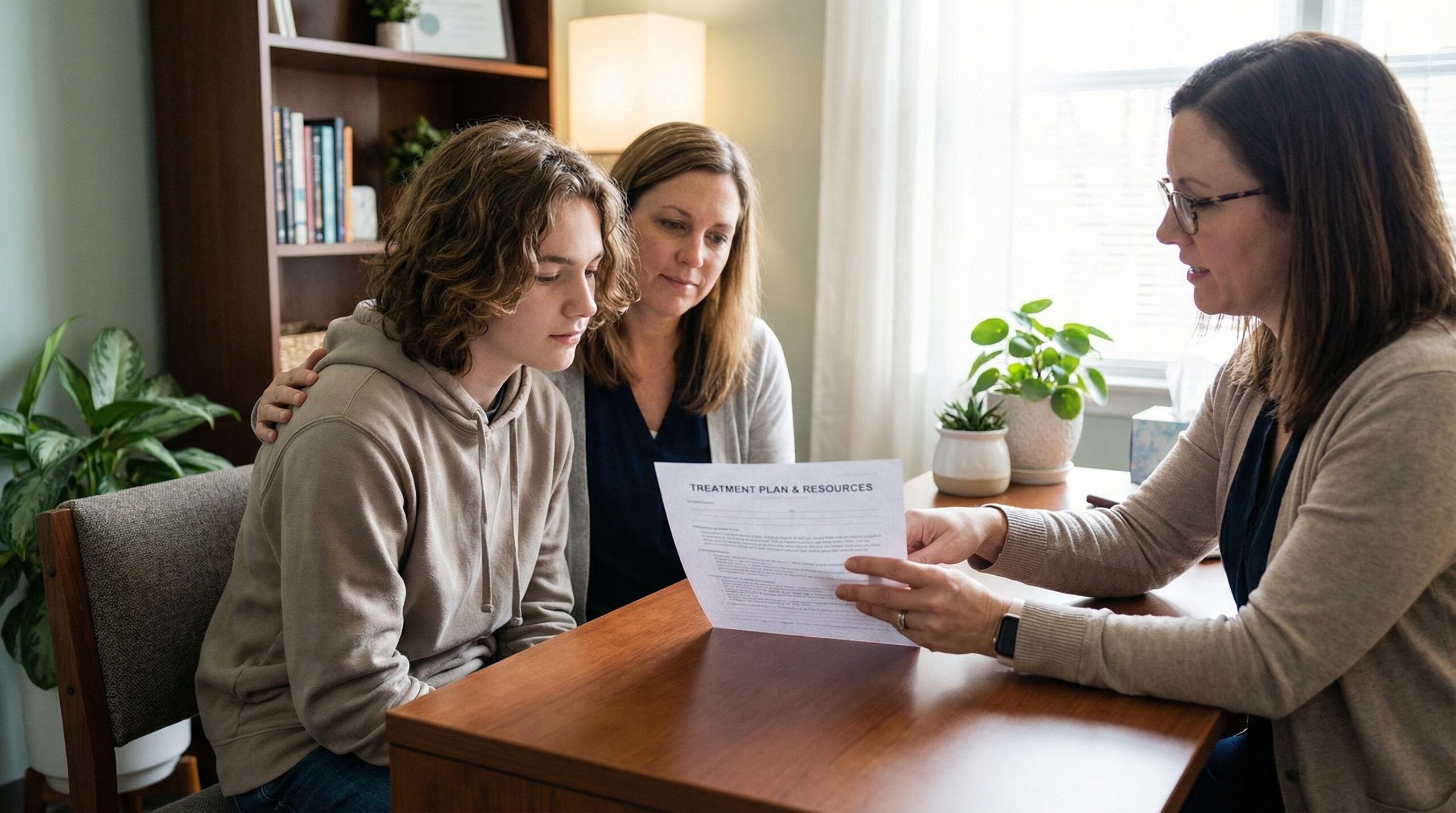
Every teen who enters our program receives an individualized treatment experience. What that looks like depends on what they’re going through—but the clinical foundation remains consistent.
Comprehensive Psychiatric Evaluation
Treatment begins with a thorough, multidisciplinary assessment. Our team evaluates each teen across every relevant domain—mental health, trauma history, family dynamics, social functioning, substance use patterns, and developmental stage—to build a treatment plan that targets the right issues in the right order.
Mood Stabilization and Safety
For many teens, the first priority is creating a sense of safety and stability. In a structured, supportive environment with predictable routines and consistent relationships, teens begin to feel calmer and more grounded—which makes deeper therapeutic work possible.
Evidence-Based Therapies
Our clinical team draws from a range of proven approaches, selected based on each teen’s needs. These include Cognitive Behavioral Therapy (CBT) to address the connection between thoughts, feelings, and behaviors; Dialectical Behavior Therapy (DBT) skills for emotion regulation and distress tolerance; psychoeducation to help teens and families understand what they’re experiencing; and motivational interviewing to support engagement and readiness for change.
Medication Management
Not necessarily required. Medication is one component of a comprehensive treatment plan, used when clinically appropriate. Our board-certified psychiatric team believes in using the least amount of medication necessary to support stability and functioning, always in combination with therapy. Some teens benefit from medication to stabilize mood or reduce symptom severity; others progress well without it. Every decision is individualized.
Family Involvement
Families are partners in the treatment process from day one. Through weekly family therapy, parent education, and ongoing communication with the care team, we help families strengthen relationships, set healthy boundaries, and build the tools needed to support their teen’s continued progress after discharge.
Academic Continuity
Treatment doesn’t mean falling behind. Our academic team helps teens stay current with schoolwork, rebuild confidence in the classroom, and develop the executive functioning skills—planning, time management, self-advocacy—that support success both during and after treatment.
What Healing Often Looks Like Over Time
Progress isn’t always linear, and every teen’s path looks different. But over the course of treatment, many families begin to see meaningful shifts:
- Improved emotional regulation and distress tolerance. Teens learn to recognize and manage difficult emotions without resorting to harmful coping strategies.
- Strengthened family relationships. Healthier parent-teen communication, more effective conflict resolution, and renewed connection built through shared therapeutic work.
- Restored daily functioning. Return to school attendance, re-engagement with self-care and responsibilities, and the ability to maintain basic routines.
- Safer coping skills. Teens develop and practice adaptive strategies for managing stress, triggers, and difficult moments—skills they can carry with them long after treatment.
- Renewed motivation and purpose. A clearer sense of identity, personal goals, and confidence in their ability to move forward.
These outcomes don’t happen overnight, and they depend on clinical care, family engagement, and the teen’s own willingness to participate in the process. But with the right support, lasting change is possible.

Common Co-Occurring Conditions
Many of the problems teens face don’t exist in isolation. Depression and anxiety frequently overlap. Trauma can drive substance use. ADHD can complicate emotional regulation and academic performance. When multiple conditions interact, treatment needs to address them together—not one at a time.
At Muir Wood, our clinical team evaluates each area of a teen’s life—emotional, behavioral, academic, social, and family—and builds an integrated treatment plan that accounts for the full picture. We assess each concern independently, monitor progress regularly, and provide coordinated mental health, substance use, and medical care when clinically appropriate.

When we treat teens in isolation—separating their mental health, substance use, and school struggles—we miss the full picture. A systems of care approach brings it all together. It’s how we move from managing symptoms to truly helping young people heal.
— Dr. David E. Smith, Chair, Addiction Medicine & MQAC, Muir Wood
To learn more about specific conditions we treat, visit our conditions we treat page or explore our focused guides on teen mental health and trauma and teen substance use disorders.
Family Involvement During Treatment
At Muir Wood, families aren’t on the sidelines. They’re active participants in a process designed to strengthen the relationships and communication patterns that will support their teen long after treatment ends.
- Regular family therapy sessions to improve communication, rebuild trust, and align goals between parents, teens, and the treatment team.
- Parent education and guidance on understanding symptoms, setting effective boundaries, de-escalation strategies, and reinforcing coping skills at home.
- Safety and crisis planning developed collaboratively so families have a clear, accessible plan for managing difficult moments—including who to contact and how to reduce immediate risk.
- Transition and reintegration support to help teens and families navigate the return to daily life, identify triggers, and reinforce the strategies that sustain long-term progress.
The more active participants there are in a client’s treatment, the better the outcomes tend to be. How do we all look at this more holistically to make a systemic change? That’s the question that guides our family work.
Frequently Asked Questions
It depends on the severity, complexity, and trajectory of your teen’s challenges. Residential treatment is appropriate when outpatient care hasn’t been sufficient—when symptoms are worsening, daily functioning has declined, or safety concerns are present. IOP may be the right fit when symptoms are moderate and your teen can safely remain at home and in school. Our admissions team can help you determine the best starting point.
Not necessarily. Medication is one component of a comprehensive treatment plan, used when clinically appropriate. Our psychiatric team believes in using the least amount of medication necessary, always in combination with therapy. Some teens benefit from medication to stabilize mood or reduce symptom severity; others progress well without it. Every decision is individualized.
Many emotional changes during adolescence—such as mood swings, identity exploration, and peer pressure—are part of normal development. However, when these struggles become persistent, interfere with school or relationships, or raise safety concerns, it may be helpful to speak with a mental health professional for guidance.
It’s one of the hardest questions parents face. In general, it’s worth seeking guidance when changes in mood, behavior, or functioning are persistent (lasting weeks, not days), worsening over time, or beginning to interfere with school, relationships, or safety. You don’t need a diagnosis to call—our admissions team can help you think through what you’re seeing and whether professional support may help.
Yes. Muir Wood provides academic support designed specifically for adolescents. Our education team helps teens stay current with assignments, manage academic pressures, and build executive functioning skills such as time management and organization. We coordinate with families and schools to ensure treatment gains translate to the classroom. Learn more about our academic program.
Discharge planning begins early in treatment. We work with families and existing providers to ensure a smooth transition—whether that means stepping down to our IOP, connecting with an outpatient therapist, or both. Our 16-week aftercare coaching program provides continued support for families, helping sustain progress and navigate challenges as they arise.
Muir Wood is in-network with most major commercial insurance plans, including Kaiser Permanente, Anthem, Blue Shield of California, United Healthcare, Aetna, Cigna, and others. We do not currently accept Medicaid or Medi-Cal. Verify your insurance online or call for a confidential benefits check.
Find Support and Healing Today
If your teen is struggling with emotional, behavioral, or functional challenges that feel beyond what your family can manage alone, compassionate and specialized help is available. Our admissions team can listen to what you’re experiencing, answer your questions, and help you understand the most appropriate path forward for your teen and family.