
In-Network With Most Commercial Insurers











*Please note that at this time, we are not in network with Medicaid/Medi-Cal
Comprehensive Care for Teens Ages 12–17 With OCD

OCD in adolescents rarely looks the way parents expect. It isn’t always the tidy, organized “perfectionist” caricature, and it isn’t always visible as handwashing or checking. Teen OCD often shows up as hours of lost time, school refusal, explosive frustration when rituals are interrupted, elaborate reassurance-seeking, or quiet mental rituals parents never see at all. By the time families begin looking for professional treatment, OCD has usually been shaping daily life for months or years.
Muir Wood’s approach to treating OCD combines evidence-based therapies recognized for adolescent OCD — including Cognitive-Behavioral Therapy (CBT) and Exposure and Response Prevention (ERP) — with trauma-informed clinical care, thoughtful psychiatric support when indicated, and the kind of family involvement that teens with OCD specifically benefit from. Our goal is not to eliminate every intrusive thought. It’s to help teens live meaningful, engaged lives without OCD dictating the terms.
Our Healing Environment in California
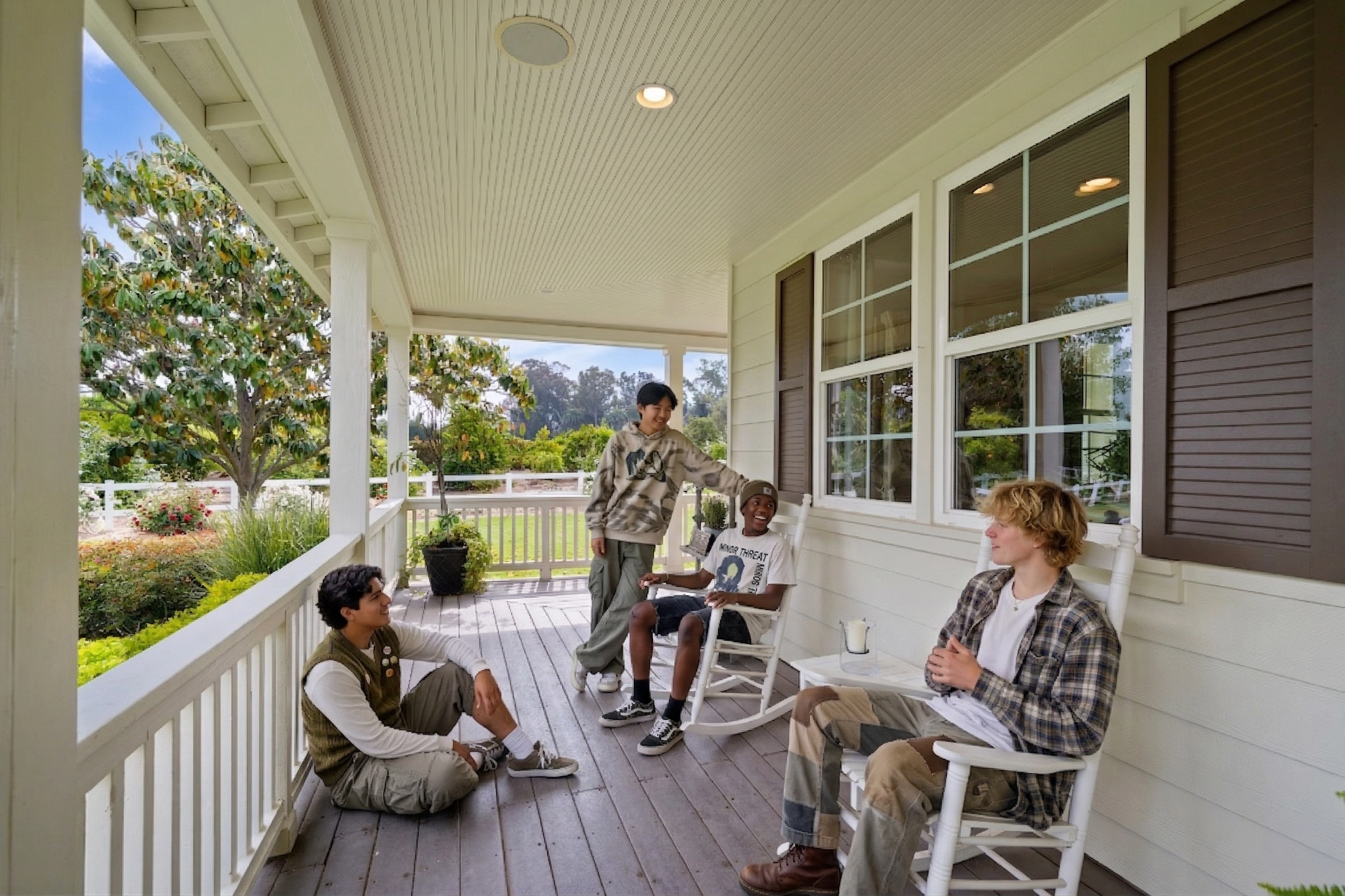
Muir Wood’s residential campuses are set in serene, nature-rich environments across California — in Sonoma County, the Central Valley near Clovis, and Southern California’s Riverside area. For teens with OCD, the environment itself supports the clinical work. Small, home-like residences, structured daily rhythms, and distance from the specific triggers and patterns of home life give teens the stability they need to engage with treatment. Our gender-separate campuses reduce social distraction, and our multidisciplinary team provides 24/7 clinical support so parents can exhale for the first time in a long time

Each campus houses a small number of teens, which matters for any teen doing individualized clinical work. Treatment is most effective when clinicians know each teen’s specific patterns, not a generalized version of them. Our small group sizes support that kind of individualized attention.
Understanding OCD in Teens
What Is Obsessive-Compulsive Disorder?
Obsessive-compulsive disorder is a mental health condition characterized by the presence of obsessions, compulsions, or both. Obsessions are intrusive, unwanted thoughts, images, or urges that cause significant distress or anxiety — and that the teen cannot simply think their way out of. Compulsions are repetitive behaviors or mental acts that a teen feels driven to perform in response to an obsession, usually with the goal of reducing distress or preventing a feared outcome. The compulsion provides brief relief, which reinforces the cycle, which makes the obsession more powerful next time.

OCD was long classified as an anxiety disorder, and it shares features with anxiety conditions. Current clinical classification places OCD and related disorders in their own diagnostic category, reflecting a growing understanding that OCD has distinct neurobiological patterns and responds best to specific, OCD-focused treatment approaches rather than general anxiety treatment.
Common Symptoms of OCD in Adolescents
Teen OCD can take many forms. Common obsession themes include:
- Contamination fears — worry about germs, dirt, illness, or environmental toxins
- Symmetry and ordering concerns — a need for things to feel “just right” or to be arranged in specific ways
- Intrusive thoughts about harm — unwanted thoughts about hurting oneself or others, despite having no desire to do so
- Moral or religious obsessions — intense fear of having done something wrong, offensive, or morally compromising
- Sexual or identity-related intrusive thoughts — unwanted thoughts that feel deeply at odds with the teen’s actual values
- Fear of making mistakes — perfectionism so intense it blocks task completion
Common compulsions include:
- Washing and cleaning rituals, including handwashing far beyond what hygiene requires
- Checking behaviors — locks, appliances, homework, body sensations
- Counting, tapping, or repeating actions a specific number of times
- Reassurance-seeking — repeatedly asking parents or friends whether something bad will happen or whether the teen is a “good person”
- Mental rituals — silent prayers, internal review of past events, mental “undoing” of intrusive thoughts
- Avoidance of situations, objects, or people that trigger the obsessions
OCD also includes a spectrum of body-focused repetitive behaviors, sometimes called BFRBs, that are clinically related but can present differently. These include skin picking (excoriation) and hair pulling (trichotillomania), which can be addressed within our treatment model when they are part of a teen’s clinical picture.

How OCD Affects Mental Health and Quality of Life
The true cost of teen OCD is rarely in the rituals themselves. It’s in what the rituals replace. Teens with OCD often lose significant time each day to obsessions and compulsions — hours of handwashing, hours of mental review, hours of avoidance — which pulls them away from school, friendships, sleep, and the developmental experiences of adolescence. Academic performance often suffers. Social withdrawal is common, because social situations become another domain where the OCD rules have to be followed. Family relationships frequently become strained as parents are drawn into the rituals themselves, providing reassurance or avoiding triggers to keep the peace.
OCD also commonly co-occurs with depression, anxiety, eating disorders, ADHD, and substance use — each of which complicates the clinical picture and deepens the impact on daily life. Teens with untreated OCD are at elevated risk of self-harm and suicidality, particularly when intrusive thoughts include distressing content that the teen believes makes them “bad” or “dangerous.” They are not dangerous. They are experiencing a recognized and treatable condition.
When we see a teen whose life has been reshaped by OCD, our first work is understanding the full picture — not just the obsessions and compulsions the family can see, but what else is happening underneath. OCD rarely travels alone, and treatment that addresses only the rituals leaves too much in place. We focus on building real self-regulation skills alongside the specific OCD work, so teens leave with tools they can actually use at home.
— Ian Wolds, Chief Clinical Officer, Muir Wood Teen Treatment
When Teen OCD Requires Professional Treatment
When Is OCD More Than a Phase?
Many adolescents go through periods of perfectionism, superstition, or ritual-like behavior as part of normal development. The line between typical adolescent patterns and clinically significant OCD is usually clear once you know what signs of OCD to look for: severity, duration, distress, and interference with daily life.
Teen OCD is typically more than a phase when:
- Obsessions and compulsions consume an hour or more of each day
- The teen experiences significant distress, shame, or fear around the thoughts or behaviors
- School, friendships, sleep, hygiene, or family life are being disrupted
- The teen has tried to resist or stop the rituals and cannot
- The patterns have persisted for weeks or months, not days
- Other mental health symptoms — depression, anxiety, self-harm, substance use — are emerging alongside the OCD
When several of these are present, it’s time for a full clinical assessment, not more waiting.
Warning Signs Your Teen May Need Residential Treatment
Most teens with OCD do well with outpatient therapy and evidence-based care at home. Residential treatment becomes the right level of care when:
- Outpatient therapy and medication adjustments have not produced meaningful progress over an extended period
- OCD has begun to interfere with school attendance, basic self-care, or safe functioning at home
- Family accommodations to OCD rituals have become so entrenched that change at home feels impossible
- Co-occurring conditions — severe depression, self-harm, suicidal ideation, substance use, eating disorders — are complicating the clinical picture
- The teen needs more individualized clinical care than weekly outpatient sessions can provide
- Crisis-level symptoms are present and safety concerns require 24/7 supervision
Residential treatment is not a failure of outpatient care. It is the appropriate next level of clinical intensity when the challenge has grown beyond what outpatient can address.
OCD and Co-Occurring Mental Health Conditions
OCD rarely exists in isolation during adolescence. Depression, anxiety, ADHD, trauma, eating disorders, and substance use all frequently co-occur with OCD, and each changes how treatment needs to be structured. At Muir Wood, our multidisciplinary clinical assessment at admission identifies the full set of conditions present, and our integrated treatment plan addresses them together — not as separate tracks that compete for the teen’s attention.
One co-occurring combination deserves specific attention: OCD and ADHD. Roughly a third of teens with OCD also have ADHD, and the two conditions can be difficult to disentangle because both can produce difficulty completing tasks, mental “stuckness,” and school-performance problems. Medication planning for teens with both conditions requires particular care, which our psychiatric team handles with experience and deliberation. When both conditions are treated together, outcomes are substantially better than when either is treated in isolation.
Our Evidence-Based Approach to Treating OCD
OCD is one of the most treatable mental health conditions in adolescence when treatment uses the right clinical approach. Decades of research have established specific therapies as effective for OCD, and our clinical model draws on those approaches as part of the individualized treatment plan built for each teen.
Cognitive-Behavioral Therapy (CBT) for Teen OCD
Cognitive-Behavioral Therapy is the foundational evidence-based approach for OCD, used across outpatient and residential care. CBT helps teens understand the relationship between obsessive thoughts, the distress they produce, and the compulsive behaviors that follow. Teens learn that thoughts — even disturbing ones — do not have the predictive power OCD claims they have, and that their worth is not measured by the content of their intrusive thoughts.
In OCD-informed CBT, teens work with their therapist to identify their particular obsession patterns, track the specific compulsive responses they’ve developed, and build the cognitive flexibility needed to respond differently. For most teens with clinical-level OCD, CBT is combined with Exposure and Response Prevention — the approach with the strongest research base for durable OCD outcomes.
Trauma-Informed Mental Health Treatment
Many teens with OCD also have a trauma history. The relationship between trauma and OCD is complex, but it often involves the development of OCD rituals as attempts to create a sense of control in the wake of overwhelming experiences. Treating OCD without attending to underlying trauma can leave the foundation of the condition untouched.
Our trauma-informed approach recognizes that OCD behaviors are protective, not pathological — the brain’s attempt to manage overwhelming anxiety in the only way it knows how. Treatment respects that protective function even as it helps the teen build better tools. When trauma is part of the picture, evidence-based trauma treatment is integrated into the teen’s overall plan rather than deferred to a separate later stage.
Exposure and Response Prevention (ERP Therapy)
Exposure and Response Prevention, or ERP, is widely considered the gold standard treatment for OCD. ERP is a specific form of CBT in which teens gradually and deliberately face the situations, thoughts, or sensations that trigger their obsessions — without performing the compulsive rituals they would normally use to reduce the distress. Over time, the brain learns that the feared outcome does not occur, the distress diminishes on its own, and the obsession loses its grip.
ERP is not a harsh “just face your fears” approach. It is structured, collaborative, and paced to the teen’s readiness. Treatment begins with lower-intensity exposures and builds as the teen’s skills grow. Clinicians stay alongside the teen throughout, helping them tolerate the discomfort of not performing a ritual and building the confidence that comes from discovering that discomfort is survivable.
At Muir Wood, individualized ERP strategies are integrated into each teen’s treatment plan when clinically appropriate, delivered by clinicians familiar with adolescent OCD and adapted to each teen’s specific presentation. ERP is one of several evidence-based modalities we use within a broader individualized approach — not a stand-alone protocol.
Medication Management When Appropriate
Some teens benefit from medication as part of their OCD treatment plan. Certain classes of medications, such as serotonin reuptake inhibitors (SSRIs), are sometimes used to reduce the intensity of obsessive thoughts and compulsive urges, making therapy more effective. Medication is never a stand-alone solution for OCD, and at Muir Wood our psychiatric team follows a non-ideological, least-necessary approach — using medication only when clinically indicated, always in combination with evidence-based therapy, and always in close collaboration with families.
Medication decisions for teens with OCD are individualized. Our adolescent psychiatrists and psychiatric nurse practitioners (PMHNPs) consider the teen’s full clinical picture, including any co-occurring conditions, current medications, family history, and the teen’s own response to previous treatments. Parents are full partners in medication decisions, and our psychiatric team explains the reasoning, the options, and the tradeoffs in language families can actually use.
Residential vs. IOP at Muir Wood
Muir Wood offers two levels of care for teens who need more than outpatient therapy can provide. Choosing between them is a clinical decision based on severity, safety, co-occurring conditions, and how much outpatient care has already been tried.
Residential Treatment in California
Our residential program provides 24/7 clinical support in structured, home-like campuses across California. Residential is the appropriate level of care for teens whose OCD has significantly disrupted daily life, when outpatient therapy has not produced lasting progress, when family accommodation has become entrenched, or when co-occurring conditions require more intensive support. Teens in residential treatment receive at least two individual sessions per week, led by our team of therapists and recovery counselors, along with group therapy, individualized clinical care, academic support through our WASC-accredited program, family programming, and the immersive structure that sustained behavioral health treatment often requires.
The typical residential stay ranges from 45 to 60 days, with some stays extending to 90 days — length determined by clinical progress and insurance authorization rather than a fixed formula. For teens with OCD, residential care supports the sustained, individualized treatment work that produces durable change — rather than the start-stop patterns that can limit outpatient progress.

Intensive Outpatient Program (IOP)
Our IOP is an appropriate step-down from residential treatment or a primary level of care for teens whose OCD symptoms are significant but who can safely remain at home. IOP includes group therapy, individual sessions, and family involvement several days a week — more structure than weekly outpatient therapy but less intensity than residential. For many Muir Wood graduates, IOP is the bridge that carries the gains of residential care into sustained recovery at home.
Continuing Care and Aftercare Planning
Treatment does not end at discharge. Our 16-week aftercare coaching program supports families through the critical transition period, when the return to home environments and local routines puts progress to the test. Aftercare coaches help families apply the communication patterns, regulation skills, and family involvement strategies they’ve built during treatment — and they help teens anticipate and respond to the triggers that home environments inevitably bring.

Call Us To Learn More
What to Expect in Daily Life During Treatment
A typical day in residential treatment at Muir Wood is structured but not rigid. Mornings begin with a consistent wake-up routine, breakfast together, and a check-in with staff. Individual therapy sessions, group therapy, and clinical skills work are distributed across the day, alongside academic time through our on-campus WASC-accredited learning program. Afternoons usually include experiential activities — art, outdoor activities, mindfulness practice, therapeutic recreation — that support regulation and build healthy coping skills. Evenings are quieter, with time for journaling, group activities, and reflection before sleep.

For teens with OCD specifically, the daily structure itself is therapeutic. Regular routines reduce the cognitive space that OCD exploits. Consistent meal and sleep patterns stabilize the underlying physiology that feeds anxiety. And the predictability of the environment lets the teen focus their energy on the actual work of treatment rather than navigating constant novelty.
Treatment happens through individualized work with the primary therapist, group therapy where teens see themselves reflected in peers facing similar challenges, and skills-building that teens can carry home. For teens with OCD, evidence-based techniques — including ERP strategies when clinically appropriate — are integrated into this individualized plan. Mindfulness and emotional regulation skills training give teens practical tools for the moments between sessions when OCD urges arise. Group therapy provides the shared experience of other teens working through similar challenges, which reduces the shame and isolation that OCD almost always carries.
Family Involvement and Family Accommodation
Family involvement in OCD treatment is not optional, and it is not window dressing. For OCD specifically, how families respond to a teen’s rituals shapes whether treatment holds or unravels.
Understanding Family Accommodation
Over months or years of OCD in the home, most families have made quiet adaptations to keep the peace. Parents may answer the same reassurance questions dozens of times a day. They may avoid topics, places, or people that trigger their teen’s obsessions. They may take on tasks the teen cannot complete, cook separate meals, clean in specific ways, or wait long stretches while rituals are performed. These accommodations feel like love — and they are — but clinically, they reinforce the OCD by confirming that the rituals and avoidances are necessary. Family members are almost never aware of how much they have adapted until treatment helps them see it.
This is not about blame. Family accommodation is what happens when parents try to meet a suffering child’s needs with the tools they have. Our work with families is about giving you different tools — ways to respond that actually help your teen get better, not just feel less distressed in the moment.
What Family Involvement Looks Like at Muir Wood
Family therapy, conducted by your teen’s primary therapist, happens weekly and includes the specific family dynamics at play for your teen. Our twice-weekly parent education classes cover the core skills families need during and after treatment — emotion regulation, effective communication, navigating conflict, and supporting recovery at home. These are general parent education classes, grounded in the clinical work your teen is doing and applicable across the range of adolescent challenges we treat. A weekly parent support group connects you with other families navigating similar challenges.
By the time your teen returns home, both you and your teen will have built on parallel tracks of growth through the treatment process — your teen through their individualized clinical work, and you through family therapy, education, and peer support. Both sides of the family system are prepared for what comes next, together.
Our Continuum of Care
We believe strong outcomes depend on continuity and collaboration. From admission through discharge, we coordinate closely with your teen’s existing providers and aftercare programs — whether that’s our IOP or another trusted outpatient partner. Our team stays in regular communication with the broader care network to support timely transitions, shared understanding, and a clear path forward.
For teens with OCD, continuity matters in specific ways. The gains teens make in treatment need to be sustained through the transition home, and that sustainability depends on a receiving clinician who understands OCD treatment, a family who has been prepared through our parent programming, and aftercare support during the highest-risk window after discharge. Our clinical team handles these handoffs deliberately, because the difference between treatment that holds and treatment that fades is often what happens in the first 90 days home.

The Muir Wood Teen Difference
Our team partners closely with parents and caregivers from day one — clear updates, a personalized plan, and real-world tools you can use between sessions — so your teen can move toward stability, well-being, and lasting wellness alongside peers facing similar challenges.
Some of our key differentiators include:
Specialists in Adolescent Care
Everything we do is built for teens ages 12–17, not adapted from adult models. Our team includes adolescent psychiatrists and psychiatric nurse practitioners (PMHNPs), highly trained therapists, nurses, educators, and recovery counselors who specialize exclusively in adolescent mental health and substance use treatment. Working as an integrated team, they deliver evidence-based, developmentally appropriate care tailored to each teen’s unique needs.
Environments That Foster Connection and Growth
In serene, nature-rich settings, our campuses are unlike any other. With 24/7 care, teens spend their days as part of a broader community — engaging in therapy, academics, and outdoor activities that strengthen resilience and self-awareness. At night, they return to home-like residences to process, decompress, and connect with others. This balance of community and intimacy creates a unique healing environment where every moment becomes a part of the recovery process.
Expertise in Primary Mental Health + Substance Use
With expertise in treating both primary mental health and co-occurring substance use challenges, our trauma-informed approach helps teens heal deeply and build lasting change. We focus on the whole person — addressing both emotional well-being and underlying behavioral patterns — to support lifelong healing.
Support for the Whole Family
Healing doesn’t happen in isolation — it happens together. At Muir Wood, families stay actively involved through therapy, education, and a 16-week aftercare coaching program that builds trust, communication, and stability long after treatment ends.
Accessible, High-Quality Care Covered by Insurance
Muir Wood is committed to removing financial barriers to care by partnering with most major insurance providers, ensuring families can access high-quality, evidence-based treatment when it matters most.
Educational Support that Restores Confidence
Through our WASC-accredited academic program, students continue their education with personalized support. Success in the classroom becomes a vital step in restoring confidence, structure, and a sense of possibility.
Continuum of Care
We coordinate closely with your teen’s existing providers and aftercare programs — whether that’s our own IOP, another outpatient program, your teen’s existing therapist, or a care infrastructure we help arrange when one isn’t yet in place. For teens stepping into or out of Muir Wood residential care, shared clinical philosophy and close communication ensure progress continues without interruption.
Speak With a Teen Treatment Specialist
Connect with our admissions team today to learn how Muir Wood can support your family.
Start the Conversation
If your teen is struggling with OCD and you’re trying to figure out what comes next, our admissions team is available to listen, answer your questions, and help you understand what the right level of care might look like for your family. There’s no pressure, no obligation — just an honest conversation about what your teen needs right now.
Frequently Asked Questions
Exposure and Response Prevention (ERP) is widely considered the gold standard treatment for OCD in adolescents. ERP is a structured form of Cognitive-Behavioral Therapy (CBT) in which teens gradually face OCD triggers while refraining from the compulsive rituals they’d normally use to reduce distress. Over time, the brain learns that the feared outcome does not occur and the obsession loses its grip. At Muir Wood, ERP is one of the evidence-based modalities used within an individualized treatment plan for teens with OCD, alongside CBT, trauma-informed care, family involvement, and — when appropriate — medication support.
Residential treatment at Muir Wood typically ranges from 45 to 60 days, with some stays extending to 90 days. The exact length is determined by clinical progress and insurance authorization rather than a fixed formula. For teens with OCD, length of stay is informed by the severity of symptoms at admission, the teen’s response to treatment, the presence of co-occurring conditions, and readiness for the step down to IOP or outpatient care. Our clinical team reviews progress regularly and adjusts the treatment plan collaboratively with families.
No. Many teens make significant progress with evidence-based therapy alone. When medication is appropriate, certain classes of medications such as SSRIs are sometimes used to reduce the intensity of obsessive thoughts and compulsive urges. Our psychiatric team follows a non-ideological, least-necessary approach — using medication only when clinically indicated, always in combination with different types of therapy, and always in close collaboration with families. Medication decisions are individualized.
OCD and ADHD co-occur in roughly a third of teens with OCD, and treating them together requires deliberate clinical attention. Both conditions can produce task-completion difficulties, mental “stuckness,” and school-performance problems, which can make them difficult to disentangle. Medication planning for teens with both conditions is particularly careful, because treatments that help one condition can sometimes affect the other. Our multidisciplinary clinical assessment at admission identifies all present conditions, and our integrated treatment plan addresses them together.
Muir Wood is in-network with most major commercial insurance plans, including Kaiser, Anthem, Blue Shield of California, Aetna, Cigna, Optum, United Healthcare, TRICARE, and others. OCD treatment, including residential and intensive outpatient care, is typically a covered benefit for teens meeting clinical medical-necessity criteria. Our admissions team verifies benefits directly with your carrier and walks you through coverage, prior authorization, and out-of-pocket responsibility before you make any decisions. Muir Wood is not in-network with Medicaid or Medi-Cal.
Group therapy at Muir Wood is intentionally sized and structured to be supportive rather than overwhelming. Our residential group sizes are small, the groups are led by clinicians experienced with adolescent mental health conditions, and the content is developmentally appropriate for teens. Many teens with OCD find group therapy profoundly helpful because the shared experience reduces the isolation and shame that OCD typically creates — and because hearing peers describe similar intrusive thoughts and rituals often loosens the grip OCD has on each individual teen’s sense of “I’m the only one.”