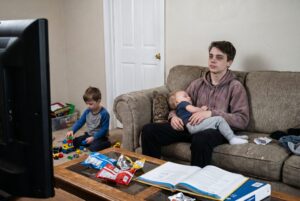
If you’re a therapist, school counselor, or behavioral health professional working with adolescents in the Central Valley, you’re likely noticing a pattern: teens are coming in with more complex presentations than they were a few years ago. More frequent crisis episodes. More families are stretched thin. More clinical pictures that feel like they’ve outgrown what a weekly or even twice-weekly session can safely hold.
At the same time, the Central Valley has historically been underserved when it comes to adolescent mental health treatment infrastructure. That has meant fewer options to point families toward, and harder conversations when outpatient alone isn’t working.
This post is a practical reference for those decision points — what each level of care actually provides, where it fits, and how to think about the transitions between them.

The Continuum of Care for Adolescent Mental Health
Most professionals working with adolescents know the continuum well: outpatient, IOP, PHP, residential. What’s changed in the Central Valley is which parts of that continuum are now actually accessible, and that changes the referral calculus in meaningful ways.
For years, the practical reality here was closer to binary. Families either stayed in outpatient or drove hours for higher-level care. IOP and PHP weren’t meaningfully local options, which meant the clinical question of which level is right often got flattened into which level is possible. That’s shifted.
What follows is a practical look at each level — what it actually provides, where it fits, and how to think about the transitions between them. The four main levels of care for adolescent mental health are:
- Outpatient therapy (individual, family, or group)
- Intensive Outpatient Programs (IOP)
- Partial Hospitalization Programs (PHP)
- Residential treatment (RTC)
Level 1: Outpatient Therapy
Individual, family, and group therapy in a traditional office setting
Outpatient therapy is the foundation of most adolescent mental health treatment. For the majority of teens experiencing anxiety, mild to moderate depression, relational stress, or early-stage emotional struggles, regular outpatient therapy with a skilled clinician is the appropriate and effective starting point.
Outpatient care typically involves one to two sessions per week — individual therapy, family therapy, or both. It allows teens to remain in their home environment, continue school, and practice skills in real-world contexts with the support of a weekly or twice-weekly session.
When outpatient is the right fit
Outpatient therapy works well when a teen’s symptoms are present but not significantly impairing their ability to function — they’re still going to school most days, maintaining some peer relationships, and engaging in treatment. It also works when the family system is stable enough to provide a supportive environment between sessions, and when there are no active safety concerns requiring more frequent monitoring.
When outpatient may not be enough
The clinical signal to start considering a higher level of care is when you notice that the teen’s condition isn’t stabilizing despite consistent engagement, or is actively declining. If symptoms are escalating between sessions rather than improving, if safety concerns are becoming more frequent, or if the family environment has become part of the acute clinical picture, outpatient therapy alone may not be providing enough structure to interrupt the pattern.
“I think about treatment as scaffolding around somebody’s wellness. Sometimes just a little bit of extra scaffolding can go a long way — and sometimes the structure needs to be more substantial.”
— Ian Wolds, PsyD, Chief Clinical Officer, Muir Wood Teen Treatment
Level 2: INTENSIVE OUTPATIENT PROGRAM (IOP)
Structured treatment several days a week — without leaving home
Intensive Outpatient Programs are one of the most misunderstood and underutilized resources in adolescent behavioral health — and for professionals working in the Central Valley, they represent a genuinely important tool that hasn’t always been locally available. That has changed.
Understanding what IOP is — and what it isn’t — can help you make more precise referral decisions and have clearer conversations with families who are weighing their options.
What IOP actually looks like
An Intensive Outpatient Program provides structured clinical treatment several days per week, typically after school hours. At Muir Wood’s IOP in Fresno, teens attend three to four days a week for group therapy, along with weekly individual therapy and bi-weekly family therapy sessions. The program also includes care coordination, parent support groups, and discharge planning throughout.
The key distinction between IOP and regular outpatient therapy isn’t just frequency — it’s the group-based clinical structure. Where individual outpatient therapy offers one-on-one insight and skill-building, IOP adds a therapeutic community of peers working through similar challenges. That peer dynamic, guided by licensed clinicians, creates a different kind of accountability and relational practice that many teens respond to particularly well.
Group topics in Muir Wood’s IOP are drawn from evidence-based frameworks including DBT for emotional regulation, Seeking Safety for trauma recovery, ACT for values-based decision-making, and relapse prevention. Each week includes structured goal-setting and safety planning.
Who IOP is designed for
IOP is the right clinical consideration when a teen’s symptoms have moved beyond what weekly therapy can adequately address, but the teen is functionally stable enough to remain at home and in school. The IOP structure works when:
- The teen can engage in a group therapy setting and benefit from peer support
- Home and school environments are challenging but not acutely destabilizing
- The clinical picture requires more intensive skill-building and monitoring than outpatient alone provides
- A teen is stepping down from residential treatment and needs structured support during the transition back to daily life
- A brief but significant increase in acuity needs to be addressed before it escalates further
“Our IOP creates a safe, supportive space where teens can gain insight, build coping skills, and keep growing — without stepping away from daily life.”
— Ian Wolds, PsyD, Chief Clinical Officer, Muir Wood Teen Treatment
IOP as a step-down from residential
One of IOP’s most important clinical functions is as a step-down from residential treatment. After a teen completes an inpatient or residential stay, returning directly to once-a-week outpatient therapy can feel like a significant drop in support — especially before the skills built during intensive treatment have been tested in real-world settings. IOP fills that gap: it provides continued clinical structure, group accountability, and family integration while the teen gradually re-engages with school and home life.
This is a particularly important point for professionals coordinating care after a hospital discharge or residential step-down. A warm IOP referral at the point of transition significantly improves the likelihood that gains from higher-level care are maintained.
IOP in the Central Valley: Now available locally
Historically, families in the Central Valley seeking IOP services for their teens faced a difficult choice: drive significant distances to access programs in the Bay Area or Los Angeles, or forgo the level of care entirely. Muir Wood’s Intensive Outpatient Program in Fresno changes that picture. Adolescents ages 12–17 from Fresno, Clovis, and surrounding communities can now access evidence-based IOP care close to home, with family therapy woven into every step.
For professionals in Fresno County, the IOP remains an option for families able to travel to the Central Valley for structured care, and may be preferable to longer-distance options further afield.
Level 3: PARTIAL HOSPITALIZATION PROGRAM (PHP)
Full-day structured treatment — the bridge between IOP and residential
A Partial Hospitalization Program occupies the level of care between intensive outpatient and residential treatment. PHP typically involves five to six hours of structured clinical programming per day, five days a week — meaning a teen is in treatment for the majority of the school day, then returns home in the evenings.
PHP provides a high degree of clinical intensity without the 24/7 residential component. It’s appropriate when a teen needs more structure and monitoring than IOP provides, but whose safety and clinical presentation don’t yet require round-the-clock care. PHP also serves as a step-down from residential for teens who need continued intensive support before transitioning to IOP or outpatient.
When PHP is the right fit
PHP is typically considered when a teen is experiencing significant functional impairment — unable to sustain school attendance, struggling with daily self-regulation, or presenting with recurring safety concerns that require daily clinical monitoring. It also makes sense when the family system can support evening and overnight safety but needs the teen to be in structured programming during the day.
A note on PHP availability in the Central Valley
We want to be straightforward about where Muir Wood currently fits in this picture: Muir Wood does not operate a PHP. We offer IOP and residential treatment. If a teen in your care requires PHP-level support, we would encourage you to contact our outreach team to discuss the clinical picture — we can help think through the right referral pathway, whether or not that leads to Muir Wood.
PHP programming in the Central Valley is limited. If you’re regularly encountering teens who fit the PHP clinical profile and finding few local options, that’s a conversation worth having with our team — and a pattern we’re tracking in this market.
Level 4: RESIDENTIAL TREATMENT (RTC)
24/7 immersive therapeutic care in a structured live-in environment
Residential treatment is the most intensive level of care available outside of hospital-based inpatient settings. Teens in residential treatment live on campus — in structured, home-like environments — and receive comprehensive clinical programming throughout the day, every day. This isn’t the same as hospitalization. Residential treatment is designed not just to stabilize, but to treat the underlying conditions driving the crisis.
“Residential treatment becomes a laboratory — a place to look in the mirror. How am I getting activated? What’s my pattern of responding? How can I start practicing something different?”
— Ian Wolds, PsyD, Chief Clinical Officer, Muir Wood Teen Treatment
What residential treatment provides that other levels cannot
The defining feature of residential care is the therapeutic environment itself. Healing doesn’t only happen in scheduled therapy sessions — it happens at meals, during downtime, in conversations with peers, and in learning to navigate conflict and frustration in real time with trained staff present. The 24/7 structure removes the teen from the triggers, social dynamics, and home stressors that often perpetuate crisis patterns at lower levels of care.
From a clinical efficiency standpoint, this matters significantly. A week of residential treatment encompasses a level of therapeutic contact that would take a month or more to replicate through IOP alone. For teens whose presentations have become entrenched through repeated crisis cycles, that accelerated intensity is often what creates the opening for real change.
When residential treatment is the clinically appropriate level
Consider a residential referral when the clinical picture includes:
- Repeated psychiatric hospitalizations or ED presentations without lasting stabilization
- Ongoing IOP or outpatient treatment that isn’t producing meaningful progress despite appropriate engagement
- A family system significantly strained or destabilized by the teen’s presentation
- Self-harm, suicidal ideation, or safety concerns requiring 24/7 monitoring outside hospital settings
- Substance use that is actively complicating engagement in lower levels of care
- A trajectory of escalation rather than stabilization, regardless of the interventions tried
“When we treat teens in isolation — separating their mental health, substance use, and school struggles — we miss the full picture. A systems of care approach brings it all together. It’s how we move from managing symptoms to truly helping young people heal.”
— David E. Smith, MD, Chief Medical Officer, Muir Wood Teen Treatment
The timing question
One of the most important findings in adolescent residential outcomes research is that timing matters. A 2020 systematic review by Peckmezian and Farmer, spanning 19 studies, found that most adolescents entering residential treatment had already cycled through two to four lower levels of care. More prior treatment attempts predicted higher acuity at admission and slower stabilization. The clinical implication is clear: when residential is the right level, earlier access produces better outcomes.
This isn’t an argument for over-triaging teens into residential care. It’s an argument for honest, timely level-of-care matching. When a teen’s presentation has clearly exceeded what IOP or outpatient can hold, waiting for additional evidence of failure before referring up compounds the problem.
“I would love to see people getting help a little earlier. Intervening before crisis fully sets in can prevent a whole lot of unnecessary fallout — for the teen, for the family, and honestly for the treatment trajectory itself.”
— Ian Wolds, PsyD, Chief Clinical Officer, Muir Wood Teen Treatment
Residential treatment for teens in the Central Valley: Muir Wood’s Clovis-area campuses
Muir Wood operates two residential campuses serving the Central Valley region: Auberry and Makena, both located in the Clovis area. Both serve adolescents ages 12–17 in gender-separate, home-like settings in natural environments — designed to provide the therapeutic distance and structure that residential care requires, without the institutional feel of hospital-based settings.
Each campus is staffed by an integrated multidisciplinary team: board-certified adolescent psychiatrists, licensed therapists, nurses, recovery counselors, and academic staff. Teens continue their education through Muir Wood’s WASC-accredited academic program during their stay, ensuring that treatment doesn’t mean falling behind on school. Family therapy is integrated throughout, not added at the end.
For families in Fresno, Clovis, Visalia, Merced, and the surrounding Central Valley, the Clovis-area campuses represent a meaningful option that keeps teens relatively close to home — which matters for the family engagement that makes step-down more successful. Families in Stockton and Modesto are also within reasonable driving distance. For families in Bakersfield, the Clovis campuses remain an accessible option within California, and Muir Wood’s Riverside-area campuses may also be relevant depending on location.
How to Think About the IOP vs. Residential Decision
For professionals navigating this decision with families, the question of IOP vs. residential often comes down to two clinical dimensions: trajectory and functional capacity.
Trajectory
Is the teen’s presentation stable with some escalation, or is it on a consistent downward path? A teen who has been managing at a moderate level of difficulty and is now starting to slip — more anxiety, lower mood, some school avoidance — may respond well to the additional scaffolding of IOP. A teen who has been in a sustained decline, cycling through crises, hospitalized in the last 60 days, or whose functioning has dropped significantly over a short period, is likely past the point where IOP will be sufficient to interrupt the pattern.
Functional capacity
Can the teen sustain a basic level of daily functioning? Are they getting to school most days? Can they participate meaningfully in group settings? Is the home environment stable enough to support overnight safety? IOP requires a teen to engage actively in a group clinical setting while continuing to navigate home and school life. If the environment itself is a major driver of the crisis, or if the teen’s capacity to function outside of structured programming has collapsed, residential is the more appropriate fit.
A practical framing: if you believe that a few more structured hours per week of clinical support would be enough to help this teen regain stability, IOP is worth trying. If you believe the teen needs removal from their current environment and round-the-clock therapeutic support to interrupt what’s happening, IOP is not likely to provide what they need.
A Note on Co-Occurring Disorders in the Central Valley
One pattern worth naming explicitly: most teens presenting at IOP or residential levels of care aren’t struggling with a single, cleanly defined diagnosis. They’re more likely presenting with mental health symptoms and substance use that are entangled, often with trauma underneath both. The industry has historically separated these into distinct treatment tracks — “mental health” programs and “substance use” programs — but that division rarely reflects the clinical reality.
“In teens, substance use is rarely just about the substance. It’s often a sign of deeper emotional distress. When we recognize that, we stop treating the behavior — and start healing the person.”
— David E. Smith, MD, Chief Medical Officer, Muir Wood Teen Treatment
For Central Valley professionals, this matters practically: when you’re looking for a referral partner for a teen who is using substances, it’s worth asking whether a program treats the underlying mental health conditions alongside the substance use — not as separate tracks, but as interconnected expressions of the same clinical picture. Programs that treat only one dimension of a co-occurring presentation tend to produce less durable outcomes.
Muir Wood’s model, at both IOP and residential levels, is built around this integrated approach. Mental health and substance use are treated together, by the same clinical team, within a trauma-informed framework that looks for the root of the behavior rather than just addressing its surface expression.
Working Together Across the Central Valley
The Central Valley is underserved in adolescent mental health treatment infrastructure. That’s a reality that affects families, and it also affects the professionals doing this work — the therapists who are carrying clients at acuity levels that strain what outpatient care can safely hold, the school counselors who are the first to notice when a student is in real trouble and aren’t sure where to send them, the pediatricians and nurses who are seeing the downstream consequences of delayed intervention.
Our goal at Muir Wood isn’t simply to fill a referral pipeline. It’s to be a genuinely useful resource and partner for the clinical community working with teens and families across this region. If you’re thinking through a case and want to talk through level-of-care questions, or if you’d like to understand more about how our IOP or residential programs work, our outreach team is available for that conversation — before any referral decision is made.
“The ability to be part of early intervention efforts in an organization with a wide front door and a lot of capability to help clients and their families — that’s what this work is about.”
— Ian Wolds, PsyD, Chief Clinical Officer, Muir Wood Teen Treatment
About Muir Wood Teen Treatment
Muir Wood Teen Treatment is a Joint Commission-accredited adolescent mental health and substance use program serving teens ages 12–17 across California. In the Central Valley, we operate an Intensive Outpatient Program in Fresno and two residential campuses — Auberry and Makena — in the Clovis area. Our clinical approach is integrated, trauma-informed, and built around the whole teen — not just the presenting diagnosis.
We work with most major commercial insurance carriers. Medi-Cal and Medicaid are not accepted.
Learn more about our Fresno IOP and Clovis residential campuses

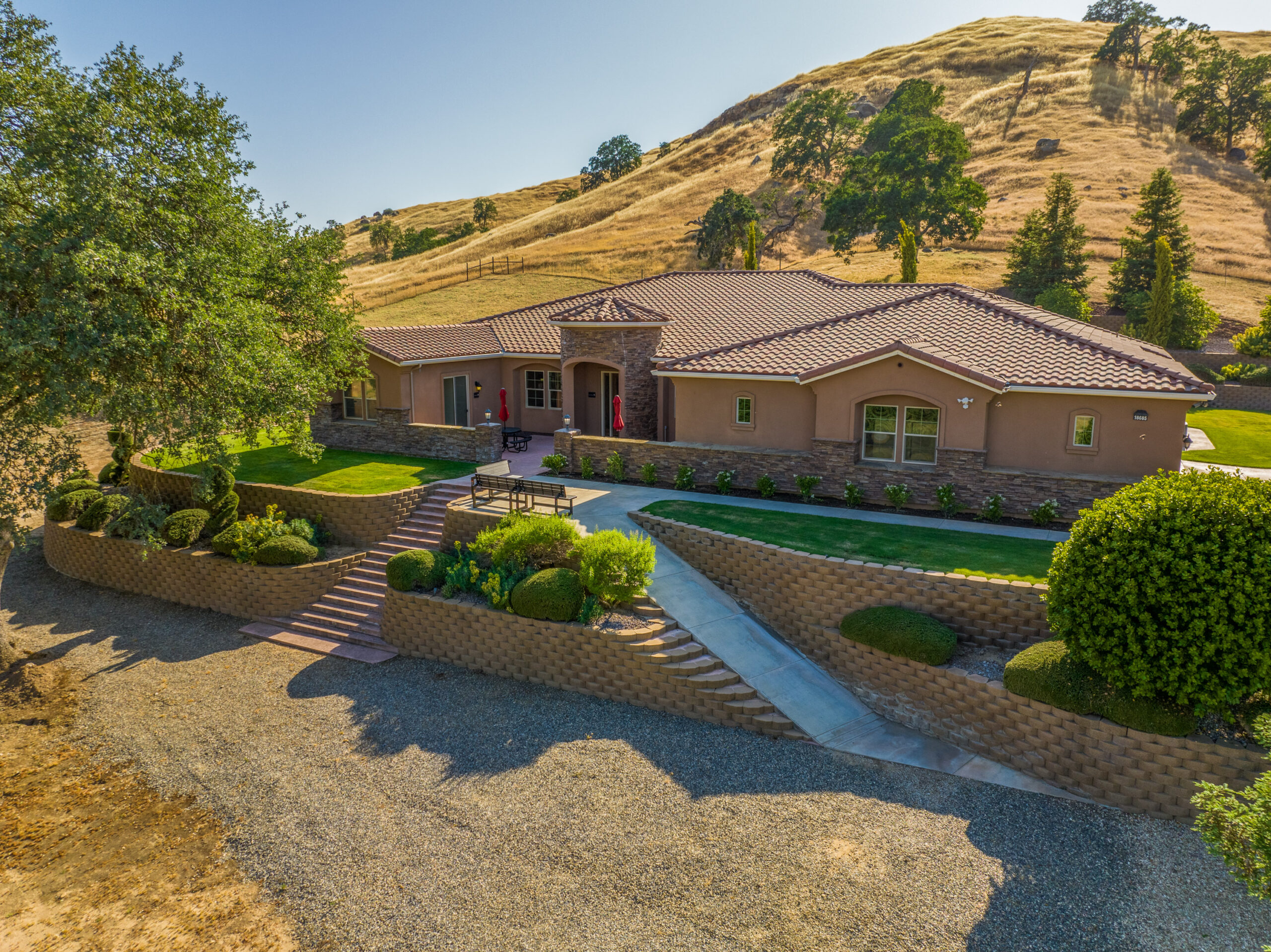
Makena Campus for Girls
Teen girls receive dual-diagnosis care for mental health and substance use challenges in Clovis—a tranquil foothill setting at the gateway to California’s majestic Sierra Nevada.

2 Simple Ways to Get Started Today
Speak With an
Admissions Coordinator
Verify Your
Insurance Coverage
Frequently Asked Treatment Questions
Length of stay in our residential and IOP programs is individualized based on clinical need, safety, progress, and school/home factors.