
In-Network With Most Commercial Insurers











*Please note that at this time, we are not in network with Medicaid/Medi-Cal
If Your Teen Is in Immediate Danger
If your teen is in imminent danger of harming themselves, call 911 or go to your nearest emergency room.

A teen who has expressed a suicide plan, attempted suicide, or has access to lethal means requires immediate psychiatric stabilization in an inpatient hospital setting. This level of care is critical for protecting safety and reducing suicide risk.
Muir Wood does not provide emergency psychiatric stabilization or treat teens with an active suicide attempt. What we provide is what comes next: structured mental health treatment for adolescents after hospital discharge, where deeper healing and skill-building can begin.
For crisis support at any time, contact the 988 Suicide & Crisis Lifeline by calling or texting 988, or reach the Crisis Text Line by texting HOME to 741741.
Help for Teens Experiencing Suicidal Ideation
If your teen has expressed thoughts about not wanting to be alive, a wish to disappear, or a feeling that life isn’t worth living—you are not alone, and reaching out for help is the most important step you can take right now.
Suicidal ideation in teens exists on a spectrum. Passive suicidal ideation—thoughts like “I wish I could just disappear”—reflects real emotional pain even without a specific plan or intent.¹˜² Active suicidal ideation involves specific thoughts about how, when, or where to end one’s life, and constitutes a psychiatric emergency. Both forms require professional attention, because passive ideation can escalate to active ideation when the underlying distress is not addressed.

Muir Wood supports adolescents whose suicide risk requires more structured care than outpatient therapy alone, but who no longer require acute hospital stabilization. For many families, we provide the bridge between crisis intervention and sustainable recovery: a structured, therapeutic environment where teens can safely begin to address the pain underneath the ideation and develop the skills to manage it.
The earlier we intervene, the more protective we can be. We’re not just reacting to a crisis—we’re giving teens the foundation to thrive.
— Dr. David E. Smith, Chair, Addiction Medicine & MQAC, Muir Wood
Why Treatment for Suicidal Ideation Is Important for Teens

Adolescence is a period of rapid emotional, cognitive, and social development. When suicidal ideation enters the picture, it can destabilize a teen’s sense of safety, disrupt their relationships, undermine their ability to plan for the future, and erode their trust in their own capacity to cope. Without professional support, these patterns become entrenched.
Teens often have difficulty naming or explaining what they’re experiencing. Suicidal thoughts in adolescents frequently coexist with depression, anxiety, trauma, substance use, or a combination of conditions—and untangling these overlapping factors requires specialized clinical assessment.
Treatment is not only about managing immediate risk. It is about helping your teen rebuild their sense of connection, purpose, and hope—and equipping your family with the tools to sustain that stability over time. The goal is not just to get through the crisis. It is to ensure the crisis does not define your teen’s future.
The Muir Wood Teen Difference
Our team partners with parents and caregivers from the very first conversation—providing transparent communication, an individualized safety and treatment plan, and practical tools for supporting your teen during and after care.
Some of our key differentiators include:
Specialists in Adolescent Care
Our entire program is built for teens ages 12–17. Our integrated clinical team—board-certified psychiatrists, licensed therapists, nurses, educators, and recovery counselors—brings specialized expertise in adolescent suicidal ideation, self-harm, and co-occurring conditions. Care is developmentally appropriate and individualized.
Community and Connection
Connection—to peers, to family, to purpose—is one of the strongest protective factors against suicidal ideation. Therapist-led group therapy alongside meaningful peer interaction helps teens feel less alone. Individual therapy deepens personal insight and helps teens apply coping skills beyond treatment.
Expertise in Primary Mental Health + Substance Use
Many teens experiencing suicidal ideation are also navigating depression, anxiety, trauma, or substance use. We treat these conditions together within a single, trauma-informed framework—never in isolation.
Support for the Whole Family
When a teen is experiencing suicidal thoughts, the entire family is affected. At Muir Wood, families stay actively involved through therapy, psychoeducation, safety planning, and a 16-week aftercare coaching program. We help families understand what their teen is going through, build skills for supporting safety at home, and rebuild communication and trust.
Accessible, High-Quality Care Covered by Insurance
We partner with most major commercial insurance providers to remove financial barriers, so families can access the support they need when it matters most.
Maintain Academics While Getting Support
Education stays a priority. Our academic team helps teens stay current with schoolwork, manage stress, and rebuild confidence. When helpful, we coordinate with schools so gains in treatment carry into the classroom.
Continuum of Care
From admission through discharge, we coordinate closely with your teen’s existing providers and aftercare supports. Whether the next step is our IOP, an outpatient therapist, or another trusted partner, shared clinical leadership ensures your teen’s progress continues without interruption.
Speak With a Teen Treatment Specialist
Connect with our admissions team today to learn how Muir Wood can support your family.
Signs of Suicidal Ideation in Teens
Suicidal ideation does not always announce itself clearly. Many young people experiencing suicidal thoughts communicate distress through behavior changes rather than direct statements. Recognizing these warning signs early can help families seek professional support.
Emotional Warning Signs
Persistent sadness or hopelessness. A sustained low mood that doesn’t lift with time, reassurance, or changes in circumstances. The teen may express a belief that things will never get better.
Feelings of worthlessness, guilt, or being a burden. Statements like “everyone would be better off without me” signal a distorted sense of their own value—a hallmark of suicidal thinking in adolescents.¹˅²
Preoccupation with death or dying. Frequent talk, writing, or artwork focused on death, dying, or suicide—including seemingly casual references that deserve closer attention.
Behavioral Warning Signs
Direct or indirect statements about suicide. Direct statements (“I want to die”) are urgent and require immediate response. Indirect statements (“I wish I could just disappear,” “What’s the point?”) should also be taken seriously—they may reflect passive suicidal ideation that can escalate.
Increased risk-taking, impulsivity, or substance use. A sudden increase in reckless behavior, substance use, or self-harm may indicate a teen is seeking ways to manage or escape overwhelming emotional pain.
Withdrawal and goodbye behaviors. Pulling away from relationships, social media silence, giving away possessions, or saying goodbye in unusual ways can signal that a teen is contemplating ending their life.
Functional Warning Signs
Decline in school engagement. Falling grades, missed assignments, or school avoidance—especially when they represent a change from previous functioning.
Sleep or appetite disruption. Significant changes in sleep patterns and appetite are common co-occurring symptoms that compound emotional distress.
Loss of interest in previously meaningful activities. When a teen stops caring about things that used to matter—sports, hobbies, friendships, future plans—it can signal a deepening sense of hopelessness.
When Suicidal Ideation Requires Professional Care
Any expression of suicidal thoughts—direct or indirect—deserves a professional response. The following patterns signal particular urgency:
- Any expressed intent, plan, or active preoccupation with death or dying
- Suicidal ideation that significantly disrupts social, academic, or daily functioning
- Intense or worsening suicidal thoughts over days to weeks despite existing supports
- Recurrent self-harm, ongoing substance use, or escalating risk-taking
- Outpatient therapy or school-based interventions that have not been sufficient to reduce risk
If your teen is in immediate danger, call 911 or go to the nearest emergency room. If the situation is not an active emergency but you are concerned about your teen’s safety, our admissions team can help you assess the appropriate level of care.
Our Programs for Teen Suicidal Ideation

Muir Wood provides two levels of care for teens experiencing suicidal ideation. The right program depends on the severity, stability, and trajectory of your teen’s needs.
When Residential Treatment May Be Appropriate
Our residential treatment programs provide 24-hour immersive care. Residential may be the right step when:
- Suicidal ideation is persistent, destabilizing, or cannot be safely managed at home
- The teen has been discharged from inpatient psychiatric care and needs a structured therapeutic step-down
- Severe emotional withdrawal, self-harm, or other unsafe behaviors are present
- Multiple co-occurring conditions require intensive, coordinated care
- 24-hour structure, supervision, and therapeutic support are needed to continue stabilization and begin building lasting coping skills
When IOP May Be Appropriate
Our intensive outpatient programs provide structured therapeutic support while teens remain at home. IOP may be the right fit when:
- Safety is stable enough for the teen to remain at home and attend school
- Suicidal ideation impacts daily functioning but can be managed with structured outpatient support
- The teen needs more frequent therapy, skills training, and family involvement than weekly outpatient provides
- IOP serves as a step-down from residential care to maintain therapeutic momentum
- Our admissions and clinical teams work with each family to determine the most appropriate starting point—and to adjust as needs evolve.
Our Clinical Approach to Treating Teen Suicidal Ideation
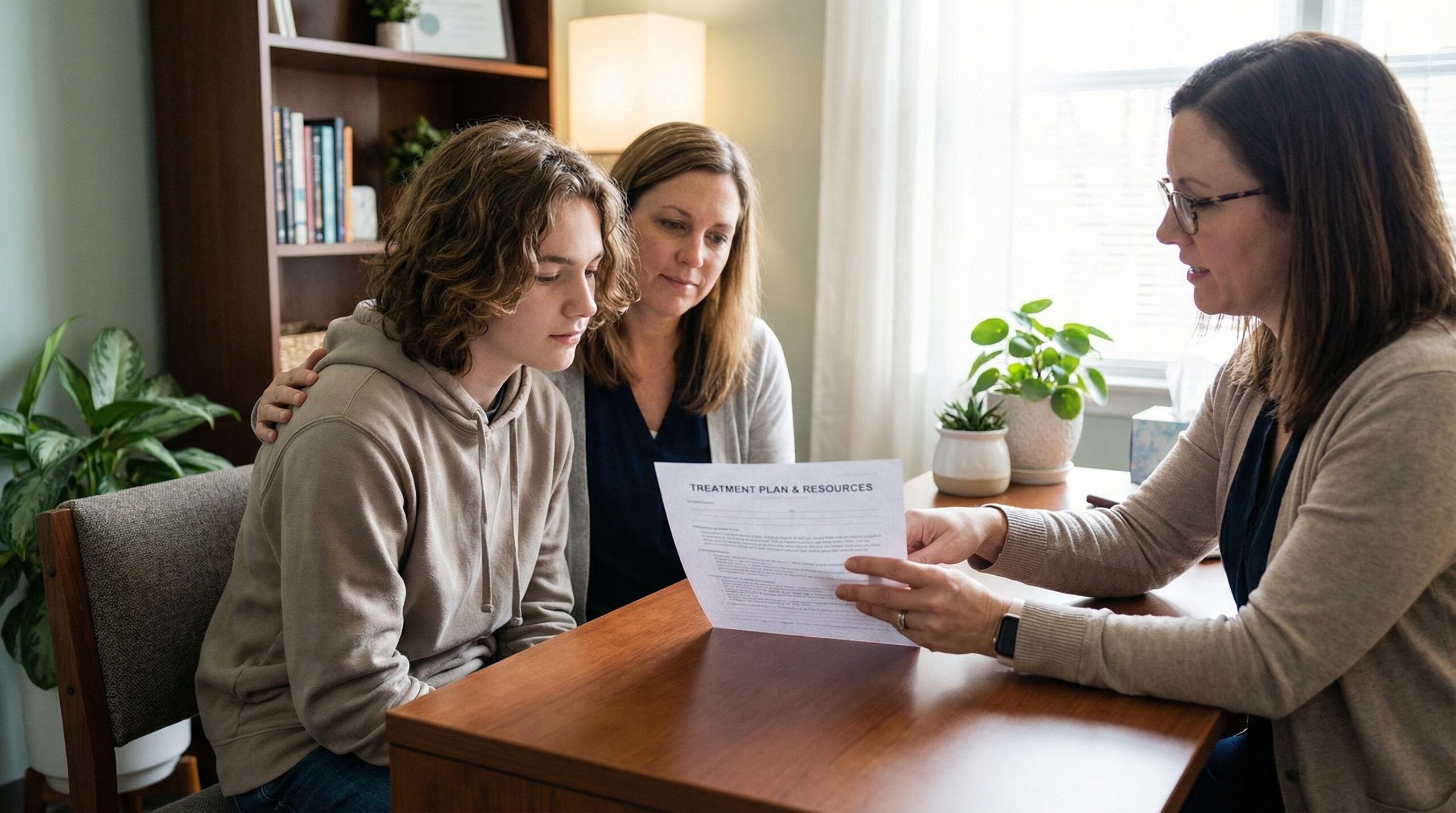
Every teen receives an individualized treatment plan built around their specific risk profile, emotional needs, and developmental stage. The clinical foundation is consistent; the specific tools and intensity are tailored to each teen.
Comprehensive Psychiatric Evaluation
Treatment begins with a thorough, multidisciplinary assessment evaluating the nature and severity of suicidal ideation, co-occurring mental health conditions, trauma history, substance use patterns, family dynamics, and protective factors. Our team uses validated clinical assessment tools to determine risk level and guide treatment decisions. This evaluation informs every treatment decision and is revisited regularly as the teen progresses.
Medication
Management
When medication is clinically appropriate, our board-certified psychiatric team provides careful evaluation and close monitoring—always in combination with psychotherapy. We take particular care with medication decisions in the context of suicidal ideation, monitoring for both therapeutic benefit and adverse effects. We believe in using the least amount of medication necessary to support stability and functioning.
Safety Planning and Stabilization
Immediate safety is the first clinical priority. Our team develops a collaborative safety plan with the teen and family—identifying warning signs, coping strategies, trusted contacts, and steps to reduce access to means. In residential treatment, the structured, supervised environment itself provides a critical layer of safety while deeper therapeutic work begins.
Academic
Continuity
Treatment does not mean giving up on school. Our academic team helps teens re-engage with education at a manageable pace—organizing assignments, rebuilding confidence, and practicing executive functioning skills. Academic progress can itself be a source of hope and forward momentum.
Family Involvement
Family involvement is essential—not optional—in treating teen suicidal ideation. Through weekly family therapy, psychoeducation, and safety planning, we help families understand what their teen is experiencing, learn to recognize warning signs, develop de-escalation and support strategies, and create a home environment that promotes safety and connection. Families are not the audience for treatment—they are participants in it.
Evidence-Based Therapies
Our clinical team uses approaches with demonstrated effectiveness for adolescent suicidal ideation. Cognitive-behavioral therapy (CBT) helps teens identify and challenge the thought patterns that fuel hopelessness.⁶ Dialectical behavior therapy (DBT) skills—particularly distress tolerance and emotion regulation—are central to building a teen’s capacity to manage crisis moments without resorting to self-harm.⁷ Additional approaches include motivational interviewing, trauma-informed care, and psychoeducation to help teens and families understand the experience of suicidal ideation and develop practical tools for managing it.
The more active participants there are in a client’s treatment, the better the outcomes tend to be. How do we all look at this more holistically to make a systemic change? That’s the question that guides our family work.
What Healing Often Looks Like Over Time

Recovery from suicidal ideation is not a straight line. But over the course of treatment, many families begin to see meaningful shifts:
- Fewer and less intense crisis episodes. Improved mood regulation and a reduced frequency and intensity of suicidal thoughts.
- Reduction or cessation of self-harm. Teens learn to identify alternatives and practice them in moments of distress.
- Re-engagement in daily life. Return to school, self-care, social activities, and family participation.
- Consistent use of coping skills. Asking for help instead of isolating. Using learned strategies rather than reverting to crisis behaviors.
- Renewed future orientation. Talking about goals, making plans, expressing interest in what comes next—signs that hope is returning.
These outcomes depend on clinical care, family engagement, and the teen’s own growing willingness to participate in their recovery. They don’t happen overnight—but with the right support, they happen.
Suicidal Ideation and Co-Occurring Conditions
Suicidal ideation is a symptom rather than a standalone diagnosis, but it is one of the most serious warning signs in adolescent mental health. It commonly occurs alongside depression, trauma, anxiety, substance use, and other behavioral health conditions and requires professional evaluation.⁴˅⁵ At Muir Wood, each condition is assessed independently and monitored regularly. Treatment focuses on current risk and clinical needs—and integrates mental health, substance use, and medical care when appropriate, always with an emphasis on safety and sustainable skill-building.
Learn more about how we treat related conditions: teen depression, teen anxiety, trauma and PTSD, and substance use disorders.

Family Involvement During Suicidal Ideation Treatment
When a teen is experiencing suicidal thoughts, the family’s role is critical—and the family’s own distress is real. At Muir Wood, we support families alongside their teen:
- Safety planning and psychoeducation. Families learn to recognize warning signs, understand the spectrum of suicidal ideation, and develop a clear, actionable safety plan for home.
- Weekly family therapy. Sessions focus on rebuilding communication, strengthening connection, and addressing family dynamics that may contribute to or be affected by the teen’s distress.
- Ongoing communication with the clinical team. Regular updates, safety-focused coaching, and guidance for supporting your teen between sessions and after discharge.
- Aftercare and transition support. Our 16-week aftercare coaching program helps families sustain strategies and navigate the transition back to daily life.
Healing doesn’t happen in isolation. It happens when clinical care, family support, education, and emotional growth come together. That’s what effective adolescent treatment looks like.
— Dr. David E. Smith, Chair, Addiction Medicine & MQAC, Muir Wood
Frequently Asked Questions
Suicidal ideation is a symptom rather than a standalone diagnosis, but it is one of the most serious warning signs in adolescent mental health. It commonly occurs alongside depression, trauma, anxiety, substance use, and other behavioral health conditions and requires professional evaluation by a mental health professional.
If your teen has attempted suicide, expressed a plan, or has immediate access to means, they need emergency psychiatric care in a hospital or inpatient setting right away. In these situations, call 911, go to the nearest emergency room, or contact the 988 Suicide & Crisis Lifeline. Residential treatment may be appropriate after crisis stabilization, when a teen continues to experience suicidal thoughts, self-harm, or significant mental health challenges that cannot be safely managed through outpatient therapy alone. Our admissions team can help families determine whether residential or IOP care is the right next step.
Passive suicidal ideation involves thoughts like “I wish I weren’t here”—a desire to die without a specific plan. Active suicidal ideation involves thoughts about how, when, or where to end one’s life. Both require professional attention. Without support, passive ideation can escalate into suicidal behavior or suicide attempts, which is why early intervention is so important. Learn more about passive suicidal ideation.
Not necessarily. Medication may be one component of treatment when clinically appropriate. Our psychiatric team uses the least amount necessary, always in combination with therapy, with close monitoring—particularly in the context of suicidal ideation.
Discharge planning begins early in treatment. We coordinate with families, outpatient providers, and schools to ensure a smooth transition. Before discharge, the clinical team develops a comprehensive aftercare plan that may include outpatient therapy, follow-up psychiatric care, continued family therapy, school reintegration support, and relapse prevention. Our 16-week aftercare coaching program provides continued family support, and safety planning remains a living document that evolves with the teen’s needs.
Muir Wood is in-network with most major commercial insurance plans. We do not accept Medicaid or Medi-Cal. Verify your insurance online or call for a confidential benefits check.
References
1. Posner, K., et al.1 (2011). The Columbia-Suicide Severity Rating Scale (C-SSRS): Initial validity and internal consistency findings. American Journal of Psychiatry, 168(12), 1266–1277.
2. Nock, M. K., et al. (2008). Cross-national prevalence and risk factors for suicidal ideation, plans, and attempts. British Journal of Psychiatry, 192(2), 98–105.
3. Liu, R. T., et al. (2020). The association between passive suicidal ideation and subsequent suicidal behavior: A meta-analysis. Journal of Affective Disorders, 275, 173–181.
4. Bilsen, J. (2018). Suicide and youth: Risk factors. Frontiers in Psychiatry, 9, 540.
5. Cash, S. J., & Bridge, J. A. (2009). Epidemiology of youth suicide and suicidal behavior. Current Opinion in Pediatrics, 21(5), 613–619.
6. Stanley, B., et al. (2009). Cognitive-behavioral therapy for suicide prevention (CBT-SP). Cognitive and Behavioral Practice, 16(4), 424–438.
7. McCauley, E., et al. (2018). Efficacy of dialectical behavior therapy for adolescents at high risk for suicide. JAMA Psychiatry, 75(8), 777–785.
If you or someone you know is in immediate danger, call 911. For crisis support, contact the 988 Suicide & Crisis Lifeline by calling or texting 988. You can also reach the Crisis Text Line by texting HOME to 741741.
Take the Next Step
If your teen is experiencing suicidal thoughts and has been stabilized from any immediate crisis, our admissions team is here to listen, help you understand your options, and guide you toward the right level of ongoing care. There is no pressure and no judgment—just a conversation about what your family needs right now.