
Teen Residential and Dual Diagnosis Treatment for Colorado Families
The right program matters
When a Colorado teen is struggling with mental health challenges, substance use, or both, families need more than a local option. They need the right option. Muir Wood Teen Treatment provides specialized residential and intensive outpatient care for adolescents ages 12–17 with the clinical depth, capacity, and family involvement that lasting recovery requires. Our California campuses are less than five hours door-to-door from most Colorado cities, and our admissions team has helped families from across the Mountain West make the transition to specialized treatment.












In-Network With Most Commercial Insurers
*At this time we do not accept Health First Colorado, CHP+, or Medicaid
Why Colorado Families Come to Muir Wood
Colorado has a serious adolescent mental health and substance use crisis, and the resources available to families in the state have not kept up. Parents researching residential treatment for their teen often face one of two realities: either there is no local program that truly fits their teen’s needs, or the programs that do exist have waitlists that can stretch weeks when their family does not have weeks to wait.
Muir Wood was built to meet the specific clinical needs of adolescents with complex, co-occurring conditions. For families whose teen needs more than the nearest program can offer, we provide a clear path forward.
Dual Diagnosis Treatment Done Right
For adolescents, mental health and substance use almost always travel together. A teen struggling with depression or anxiety may turn to substances to cope. A teen using substances often has underlying trauma, a mood condition, or an attention disorder driving the use. Programs that specialize in one side or the other — mental health only, or substance use only — miss half the clinical picture, and families whose teen presents with both are often told their teen “isn’t a fit.”
At Muir Wood, we treat both with equal clinical depth through a single integrated model. Our early reputation was built on dual diagnosis expertise, and we have deepened that expertise through years of trauma-informed, developmentally specialized care. We don’t treat the condition — we treat the teen.
When Local Programs Are Full or Not the Right Fit
Adolescent residential treatment capacity in Colorado is limited, and waitlists at in-state programs can mean weeks of delay during a crisis. For many families, that delay is neither safe, tolerable, nor necessary. Muir Wood has the capacity to help Colorado families now, and our admissions team can often verify insurance, coordinate travel logistics, and confirm admission in a matter of days, not weeks.
When local programs are full or don’t match your teen’s clinical needs, out-of-state treatment stops being a compromise and becomes the clearest path forward.

Distance as a Therapeutic Asset
Residential treatment works, in part, because it creates space — physical, emotional, and social distance from the environments and relationships that have been contributing to a teen’s struggle. Local triggers, peer networks, access to substances, entrenched family conflict: these are the factors residential treatment is designed to interrupt. Geographic distance from home amplifies that therapeutic benefit, not diminishes it.
For many Colorado teens, traveling for treatment isn’t a logistical hurdle. It’s part of what makes treatment stick.
The Colorado Teen Mental Health Landscape
Colorado families navigating adolescent mental health and substance use are not facing these challenges in isolation. Statewide data from the Colorado Department of Public Health and Environment (CDPHE) and the Healthy Kids Colorado Survey paint a picture of a generation under significant strain:
- Colorado has consistently ranked among states with the highest rates of youth suicide in the nation, a trend documented across multiple years of CDPHE surveillance data.
- The Healthy Kids Colorado Survey, conducted biennially by CDPHE, has documented elevated rates of persistent sadness, anxiety, and substance use among Colorado middle and high school students, with post-pandemic data showing continued deterioration in several key indicators.
- Colorado’s geography and demographics create real access-to-care challenges. Specialized adolescent residential treatment is concentrated in the Front Range, leaving families in mountain, western slope, and eastern plains regions with limited in-state options even before considering program fit or capacity.
- The state’s marijuana regulatory environment has made access to cannabis products more normalized among adolescents than in most states, with implications for early substance use and adolescent brain development.
These realities are not reasons for alarm. They are reasons for accurate information and clear-eyed decision-making. Many Colorado families discover that the right treatment for their teen exists — it simply may not be nearby.

What We Treat
Muir Wood specializes in the mental health and substance use challenges most common in adolescents, and in the complex situations where those challenges overlap. Every teen receives an individualized treatment plan built around the full picture of what they’re experiencing.
Substance Use and Dual Diagnosis
For adolescents, substance use rarely exists in isolation. We treat substance use alongside the underlying mental health conditions driving it, because addressing only one limits how far recovery can go. Our integrated clinical model is what sets Muir Wood apart for Colorado families whose teen has been turned away from programs that specialize in only one side.

Depression and Mood Disorders
From persistent sadness and hopelessness to bipolar disorder and emotional dysregulation, our clinical team provides evidence-based treatment for the full spectrum of adolescent mood conditions, often in combination with the anxiety, trauma, or substance use that accompanies it.


Trauma and PTSD
Our trauma-informed approach recognizes that behaviors adults sometimes label as defiance, withdrawal, or acting out are often protective responses to past pain. We treat the teen, not just the symptom.
Self-Harm and Suicidal Ideation
Self-harm and suicidal thoughts do not disqualify a teen from treatment — they are exactly what treatment is designed to address. Our clinical team has deep experience supporting teens through these challenges in a safe, structured residential environment.
Behavioral and Family Challenges
When outpatient therapy, medication adjustments, and school interventions haven’t produced lasting change, residential treatment can provide the structure and clinical intensity meaningful progress requires.
Our Programs: Residential and Intensive Outpatient Care
Muir Wood offers two levels of care for teens who need more than weekly outpatient therapy can provide. Whether your teen needs full-time residential support or structured daytime programming, we match the level of care to your family’s needs, and we’re experienced at helping out-of-state families navigate that decision.
Residential Treatment
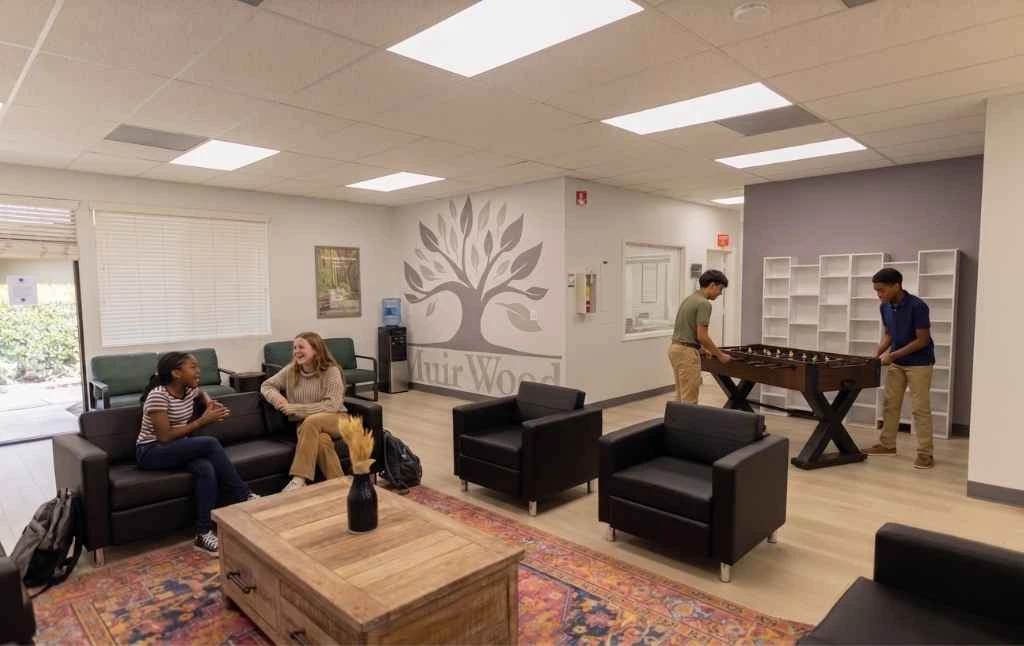
Our residential program provides 24/7 clinical support in structured, home-like environments across California. Teens receive individual therapy, group therapy, family programming, and WASC-accredited academics in serene, nature-rich campuses. Residential programs are gender-separate and organized around the specific clinical needs of adolescent boys and girls. For most Colorado families, residential treatment is the appropriate starting point when outpatient care has not produced lasting change or when safety concerns require 24/7 supervision.

Intensive Outpatient Programs
For families whose teen has stepped down from residential care and returned to Colorado, or for Colorado-based teens who do not need 24/7 residential support, Muir Wood’s intensive outpatient program offers several days a week of structured treatment in California. IOP is typically not the first point of entry for out-of-state families, but it can be an important continuation-of-care option in specific circumstances. Our admissions team can help you determine the right starting level of care for your teen.
Why Distance Can Help Teens Heal
One of the hardest decisions Colorado parents make is whether sending their teen out of state for treatment is the right choice. The instinct to keep a struggling teen close is powerful and understandable. But adolescent residential treatment research, and the clinical experience of programs like Muir Wood, consistently point to something counterintuitive: for many teens, the geographic separation that comes with residential treatment is part of what makes it work.
Separation From Local Triggers
For a teen struggling with substance use, local triggers include more than just access to substances. They include specific friends, specific locations, specific routines, and specific emotional patterns associated with use. For a teen struggling with depression, anxiety, or trauma, local triggers can include schools where relational conflict is unresolved, neighborhoods where traumatic events occurred, or family dynamics that escalate quickly. Residential treatment interrupts these patterns by design. Geographic distance amplifies that interruption.
Peer Networks and the Social Brain
Adolescent peer networks are powerful behavioral drivers. When a teen’s friend group has become part of the problem, whether through shared substance use, shared risk behaviors, or simply the emotional entanglement of adolescent social dynamics, staying connected to those networks during treatment limits how much change is possible. Out-of-state treatment creates a clean break, not because the connection itself is bad, but because teens need space to rebuild an identity that isn’t anchored to a peer group they’re trying to grow beyond.
Neutral Ground
Home is not neutral territory for a teen in crisis. It’s the place where the family conflict is happening, where the patterns are entrenched, where the parents’ patience has been worn thin. When treatment happens in a setting that is unfamiliar, calm, and structured by people who aren’t part of the family’s history, teens often engage in ways they wouldn’t at home. The neutral ground effect is real, and it’s one of the reasons residential treatment works.
When Distance Is The Right Answer
Geographic distance isn’t the right choice for every teen or every family. Some teens do best with local outpatient care and strong family support. But when a teen needs a level of care and clinical specialization that isn’t locally available, distance becomes not just acceptable but advantageous.
Stories From Muir Wood
Every family that comes to Muir Wood arrives with a different story — and leaves
with a different one. Here, a teen alum and a parent share theirs.
Real Reviews from Real Parents
Nothing speaks to what a teen treatment center is like more than reviews from parents who have lived the experience.
“I can’t say enough positive details of how Muir Wood is there for your child and also there to keep the families informed along the way. It is very emotional at times, but there is always someone you can call if questions arise and you are supported by attending online parenting classes while your child is in residential. They help give you as much information as possible to help you have a healthy and successful road in the future. I would recommend 110%.”
— Malinda C., Jan 2026
“I am so grateful Muir Wood exists. We were in crisis and didn’t know where to send our son to keep him safe — Muir Wood was the answer to our prayers. His therapist was loving, kind, and non-judgmental, and the Zoom parent sessions helped us, too. The evaluation and diagnosis he received have been life-changing, getting him set up with accommodations after discharge. Thank you, Muir Wood, for being a safe place for these boys when there’s nowhere else to turn. We needed you.”
— Adele K., May 2026
“An amazing experience for both my daughter in treatment and us as parents. We had an amazing team helping us from day 1. She was living in beautiful facilities, and I knew from the beginning she would be there with a group of trusted, positive, and helpful staff. The communication weekly has been amazing, and I highly recommend this to anyone who needs help for their child.”
— Carrie M., Feb 2026
“Ruby had a very positive experience overall both times. Many programs make lots of promises and don’t deliver. Muir wood was a transformational experience for Ruby and I think the experience of being part of a community of peers was especially helpful. I’m a mental health professional myself and have already recommended Muir Wood to friends with teens who are struggling.”
Sasha A. Blum – September 2023
“There really are other families that are struggling in more or less the same ways that we are,” she shares in the video below. “I think there’s a way that addiction can make people feel like it’s only happening to them, and it’s really not. It’s behind so many closed doors. And I only wish that more people would come out and get the help that they deserve and that is there to be had. I’m really grateful we found it.”
Katie F. – June 2024
Traveling to Muir Wood From Colorado
One of the most common questions Colorado families ask is how manageable the travel actually is. The answer is: very. Denver International Airport offers daily nonstop service to airports serving all three of Muir Wood’s California campus regions, with multiple departure times throughout the day operated by major carriers including United, Southwest, and Frontier. In all cases, families can travel door-to-campus in well under five hours
Sonoma County Campuses (Petaluma and Penngrove)
Fly DEN → SFO. Roughly eight nonstop flights operate daily, with departures spread from early morning through late evening. Flight time is approximately 2 hours, 55 minutes. From SFO, the Petaluma and Penngrove campuses are about 47 miles — roughly a 50-minute drive. Our Sonoma County campuses include the Lohrman Campus for Girls (dual diagnosis), the Skillman Campus for Boys (dual diagnosis), and the Penngrove Campus for Girls (primary mental health).
Central Valley Campuses (Clovis / Fresno)
Fly DEN → FAT (Fresno Yosemite International). Three nonstop flights operate daily, served by United and Southwest. Flight time is approximately 2 hours, 20 minutes. The Clovis campuses are approximately 10 miles from FAT — about 15 minutes by car. Our Central Valley campuses include the Makena Campus for Girls and the Auberry Campus for Boys, both treating dual diagnosis.
Southern California Campuses (Riverside)
Fly DEN → ONT (Ontario International Airport). Approximately six nonstop flights operate daily, served by United, Southwest, and Frontier. Flight time is approximately 2 hours, 25 minutes. Our Riverside campuses — the Edgewild Campus for Girls and the Bradley Ranch Campus for Boys — are about 22 miles from ONT, roughly a 25-minute drive. Ontario Airport is the correct and most convenient gateway for Riverside, closer and less congested than LAX, with strong direct service from Denver.
Our admissions team helps Colorado families coordinate flights, ground transportation, and arrival logistics for every new admission. For many families, the travel is the easiest part of the process.
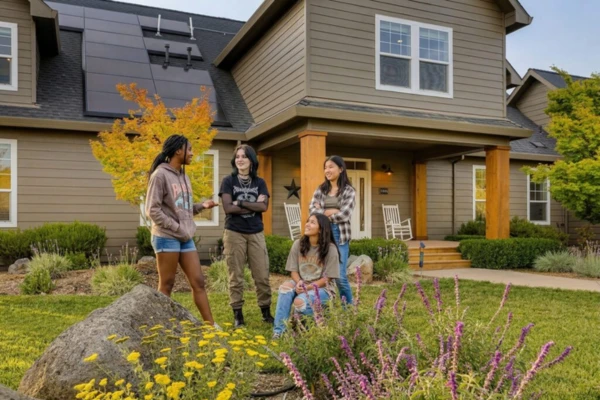
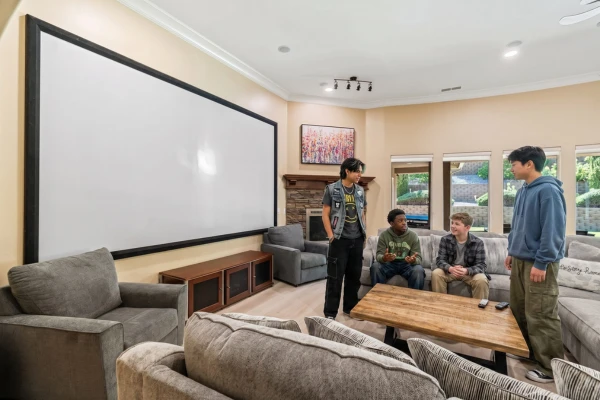
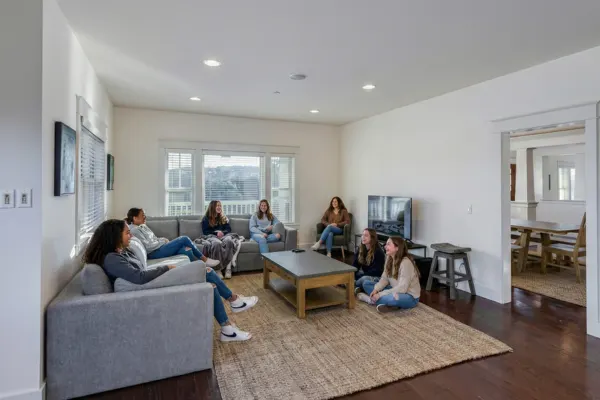
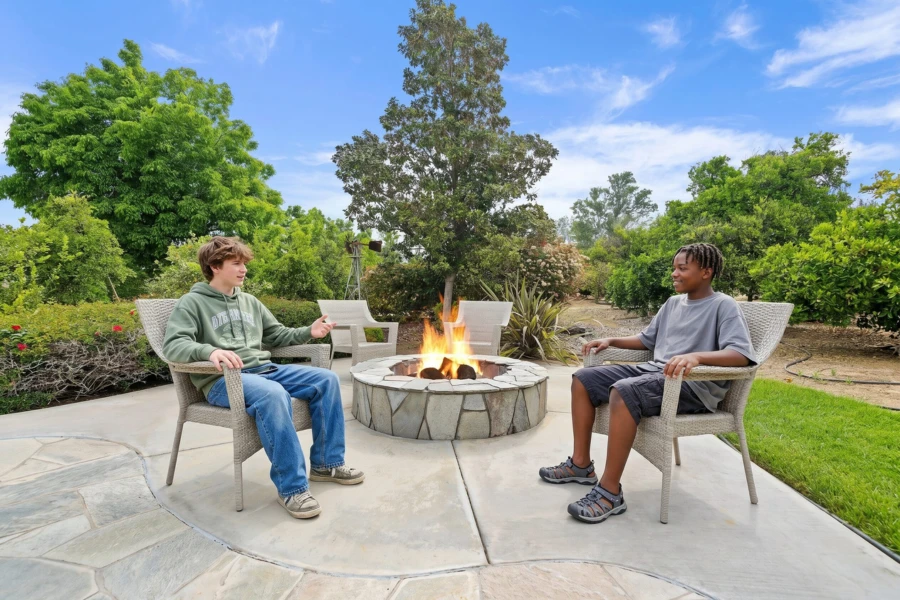
Safe, Supportive Spaces for Teen Healing











Staying Involved From Colorado
For most Colorado parents, the hardest part of considering out-of-state treatment is not the distance itself. It’s the fear of being disconnected from their teen during a critical time. We built our family programming to address this fear directly. Distance does not have to mean disconnection.
Family Therapy and Communication
Weekly family therapy sessions are conducted by your teen’s primary therapist, the same clinician your teen sees in individual therapy, so the clinical picture stays unified. For out-of-state families, these sessions are available via secure video. You will know your teen’s therapist, and your teen’s therapist will know you.
Parent Education and Support Groups
Twice-weekly parent education classes are available via video, led by our Director of Family Services. These classes cover practical skills for parenting a teen in treatment and planning for the transition home. A weekly parent support group connects you with other families currently in the program, including Colorado families and other out-of-state parents who understand what you’re navigating.
Huddle Calls and Regular Updates
Regular huddle calls with your teen’s treatment team provide progress updates, answer questions, and coordinate planning for aftercare. Colorado families frequently tell us they feel more informed and more involved in their teen’s treatment at Muir Wood than they did in local outpatient care, because our program is built around family involvement, not despite it.
The 16-Week Aftercare Coaching Program
After discharge, Muir Wood families continue with a 16-week aftercare coaching program that supports the transition home — a particularly important resource for Colorado families returning to an environment that is still in Colorado, with local providers, local schools, and local relationships to navigate. Our aftercare coaches help families sustain the gains of treatment through the highest-risk transition period.
Getting Started: What to Expect When You Call
We know reaching out for teen treatment is one of the hardest things a parent can do. Here’s exactly what happens when you call Muir Wood from Colorado.
Speak With an Admissions Coordinator
A real person answers, not a call center. You’ll have space to share what’s happening with your teen, ask questions, and get honest information. There’s no pressure and no obligation to move forward.
Brief Clinical Consultation
Our admissions team will help you understand what level of care is appropriate for your teen, whether Muir Wood is the right fit, and if not, point you toward better options. For Colorado families, we also discuss travel logistics, family involvement, and what the first week of treatment typically looks like.
Insurance Verification and Next Steps
We verify your insurance coverage directly with your carrier, usually on the same call. You’ll know your benefits, your out-of-pocket responsibility, and any prior authorization requirements before you make any decisions.
Admission Coordination
Once you’ve decided to proceed, our team coordinates the admission logistics: flight timing, ground transportation, arrival paperwork, and the first family therapy session. For most Colorado families, admission can happen within days of the first call, not weeks.
Start the Conversation
If your Colorado teen is struggling and you’re trying to figure out what comes next, our admissions team is available to listen, answer your questions, and help you understand what the right level of care might look like for your family. There’s no pressure, no obligation, and no assumption that Muir Wood is the answer — just an honest conversation about what your teen needs right now.
Frequently Asked Questions for Colorado Families
Muir Wood operates residential campuses in three California regions: Sonoma County (serviced by SFO airport, about 2 hours 55 minutes from Denver with a 50-minute drive to campus), the Central Valley (serviced by Fresno Yosemite International or FAT, about 2 hours 20 minutes from Denver with a 15-minute drive to campus), and Southern California (serviced by Ontario International or ONT, about 2 hours 25 minutes from Denver with a 25-minute drive to campus). In all cases, Colorado families can travel door-to-campus in well under five hours. Denver International Airport offers multiple daily nonstop flights to each of these destinations.
Licensed, Certified, and Trusted






Clinically reviewed by Dr. Ian Wolds Psy.D.
— Updated on May 6, 2026